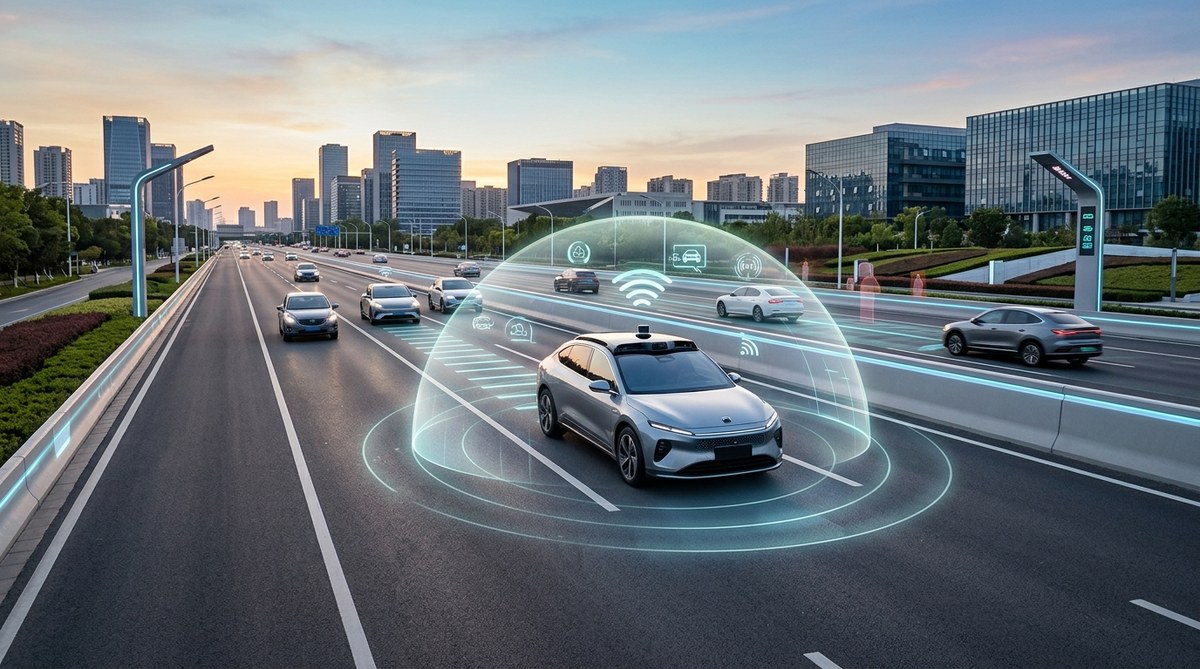
Autonomous vehicles are no longer just a concept from science fiction. They are rapidly becoming a key part of the evolving transportation landscape. With advancements in AI, sensors, and machine learning, self-driving cars promise to make roads safer and driving more efficient. For many, this shift sparks curiosity about how these vehicles will impact safety standards, accident rates, and the future of mobility.
Autonomous vehicles have the potential to significantly improve road safety by reducing human errors, implementing advanced sensors, and fostering smarter traffic management. Their integration into transport systems is shaping the future of safer, more efficient roads worldwide.
Autonomous vehicles are changing the way we think about road safety. As these vehicles become more prevalent, they promise to address many of the issues caused by human error, which accounts for a large majority of traffic accidents. While challenges remain, the ongoing development of self-driving technology offers a promising path toward safer roads and smarter transportation systems.
How autonomous vehicles are reshaping safety standards
The core promise of autonomous vehicles is their ability to reduce accidents and save lives. Human mistakes such as distracted driving, fatigue, or impairment are responsible for over 90 percent of traffic crashes. Self-driving cars aim to eliminate these risks by relying on precise sensors, real-time data, and advanced algorithms.
The role of sensors and AI in accident prevention
Autonomous vehicles are equipped with an array of sensors, including lidar, radar, and cameras. These tools provide a comprehensive view of the vehicle’s surroundings, allowing it to detect other vehicles, pedestrians, and obstacles with high accuracy. AI processes this data rapidly to make split-second decisions.
Experts say that when properly calibrated, these systems can respond faster than human drivers in complex environments. For example, they can brake promptly when detecting an obstacle or adjust their path to avoid a sudden hazard. This proactive approach helps prevent accidents before they happen.
Practical steps autonomous vehicles take to enhance safety
- Constant Monitoring: Self-driving cars continuously scan their environment to identify potential risks.
- Predictive Behavior: They anticipate the actions of other road users to avoid conflicts.
- Redundant Systems: Multiple sensors and backup processes ensure safety even if one component fails.
- Adaptive Learning: AI models learn from real-world data to improve performance over time.
- Communication: Vehicles can communicate with each other and infrastructure to coordinate movements and prevent collisions.
Key techniques and common mistakes in autonomous driving
| Technique | Purpose | Common Mistake |
|---|---|---|
| Sensor fusion | Combining data from multiple sensors | Overreliance on one sensor type |
| Machine learning | Improving decision-making | Learning from biased or incomplete data |
| Real-time processing | Quick response to hazards | Latency issues or computational delays |
| Redundant systems | Ensuring safety despite failures | Underestimating sensor limitations |
| Vehicle-to-everything communication | Enhancing situational awareness | Security vulnerabilities or communication lapses |
“Autonomous vehicles are only as safe as the data they learn from. Continuous testing and rigorous validation are vital to build trust and reliability.” — Dr. Susan Lee, transportation safety expert
Impact of autonomous vehicles on traffic and accident rates
Studies indicate that widespread adoption of self-driving cars could lead to a significant drop in road accidents. According to the National Highway Traffic Safety Administration, human error is a factor in 94 percent of crashes. Removing or reducing human involvement could transform safety standards.
How self-driving cars can reduce traffic fatalities
- Eliminating distracted driving: No phone calls or daydreaming behind the wheel.
- Consistent adherence to traffic laws: No speeding or reckless maneuvers.
- Improved reaction times: Immediate response to hazards.
- Better traffic flow: Coordinated movements reduce bottlenecks and collisions.
Practical processes for integrating autonomous vehicles safely
- Gradual rollout: Start with controlled environments and limited geographic areas.
- Robust testing: Use simulation, closed courses, and real-world trials.
- Regulatory standards: Establish safety benchmarks and compliance requirements.
- Public education: Inform citizens about autonomous vehicle capabilities and limitations.
- Collaboration: Foster partnerships between automakers, tech firms, and policymakers.
Common pitfalls and how to avoid them
| Mistake | How to address it |
|---|---|
| Overestimating technology | Continual testing and incremental deployment |
| Insufficient cybersecurity | Implement strong security protocols |
| Lack of standardized regulations | Develop international safety standards |
| Ignoring edge cases | Focus on rare but critical scenarios |
| Public mistrust | Transparency and regular safety updates |
Shaping policies for safer roads
Governments worldwide are working to create policies that harness the benefits of autonomous vehicles while addressing safety concerns. Effective regulation is key to integrating self-driving cars without compromising safety standards.
Policy considerations for autonomous safety
- Liability frameworks: Clarify who is responsible in case of accidents.
- Data privacy: Protect user information and sensor data.
- Testing protocols: Define safety testing and certification processes.
- Infrastructure upgrades: Invest in smart traffic management systems.
- Public engagement: Gather input and address community concerns.
Future transportation policies influenced by autonomous vehicles
- Smart city initiatives: Integrate vehicle-to-infrastructure communication.
- Mobility as a service: Expand access to shared autonomous transportation.
- Environmental regulations: Promote electric self-driving vehicles to reduce emissions.
- Safety standards: Enforce rigorous testing and reporting requirements.
Practical steps for policymakers
- Develop clear regulations: Set safety benchmarks and operational limits.
- Support pilot programs: Test autonomous vehicle deployments in real-world settings.
- Encourage innovation: Fund research and development efforts.
- Collaborate internationally: Align safety standards across borders.
- Educate the public: Promote understanding of autonomous vehicle benefits and risks.
Looking toward a safer, smarter future
As autonomous vehicle technology advances, the potential to create safer roads becomes more tangible. By integrating intelligent systems, establishing robust policies, and fostering public trust, we can make transportation safer for everyone.
The road ahead involves continuous refinement
The journey to fully autonomous, safe roads involves addressing technical challenges, refining algorithms, and updating regulations. Industry leaders and policymakers must work hand in hand to ensure that safety remains the top priority.
A personal call to action
Automotive professionals and safety advocates can contribute by supporting research, advocating for safe deployment practices, and educating the public. Staying informed about technological progress and policy changes is essential as we transition to this new era of mobility.
Driving safety into the future with autonomous vehicles
The promise of autonomous vehicles is not just about convenience but about fundamentally improving road safety. By understanding the technology, addressing challenges proactively, and shaping thoughtful policies, we can harness this innovation to save lives and create smarter cities. Embrace the change, stay engaged, and contribute to safer roads for all.