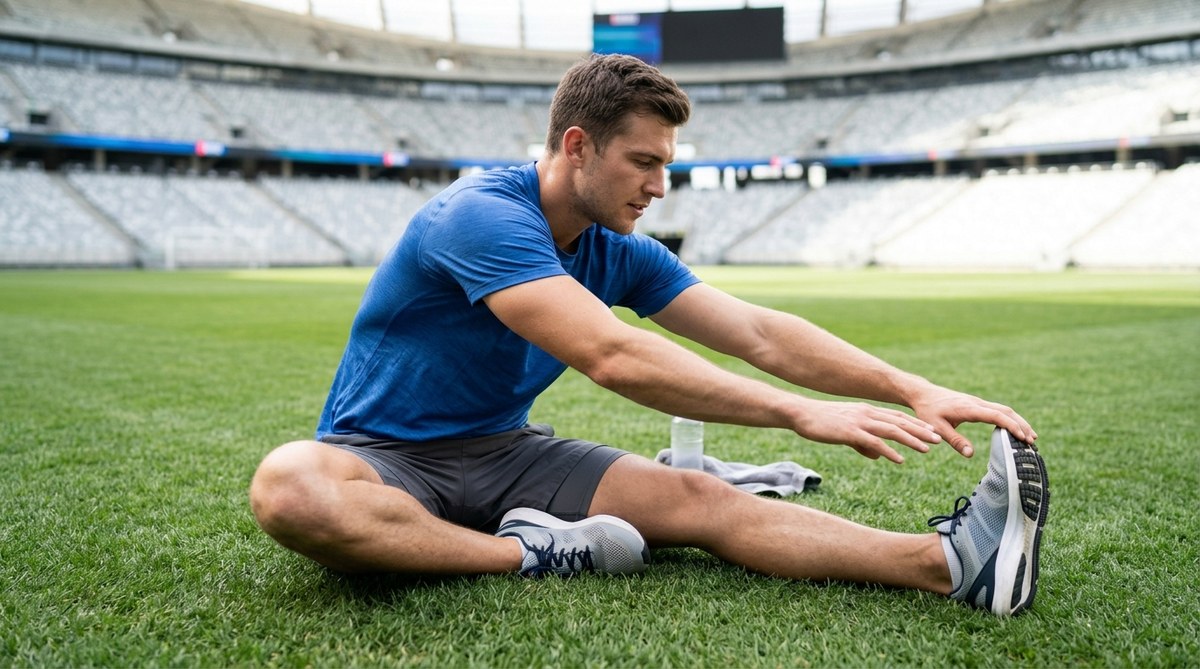
You just finished a hard workout. Maybe you ran a 10K, played a full 90 minutes of soccer, or crushed a heavy leg day. Your muscles are warm, your heart rate is up, and you feel accomplished. But then you do it. You grab your bag, check your phone, and head for the car without stretching. Sound familiar?
You are not alone. Most amateur and semi-professional athletes skip the cool-down. In 2026, with training schedules getting tighter and recovery science getting better, skipping this step is a mistake you cannot afford. The best post-game stretching routine does not take 30 minutes. It takes less than 10. And it can save you from days of stiffness, reduce your injury risk, and help you get back to training sooner.
The best post-game stretching routine is a short, targeted sequence of static and dynamic stretches done within 10 minutes of finishing exercise. It focuses on the hips, hamstrings, quads, glutes, and lower back. This routine reduces delayed onset muscle soreness, improves range of motion, and lowers injury risk. It works for runners, soccer players, and weightlifters alike. Consistency matters more than duration.
Why Most Athletes Skip the Cool-Down
Let’s be honest. After a game or a lift, your brain is already thinking about the next thing. Shower. Food. Work. Sleep. Stretching feels optional because the immediate payoff is invisible. You do not feel stronger five minutes after holding a hamstring stretch. But the cost of skipping it shows up the next morning.
Stiffness, tight hips, and a sore lower back are common complaints. Over time, skipping the cool-down leads to muscle imbalances and a higher chance of strains. If you are a runner, tight quads can pull on your kneecap. If you are a weightlifter, tight hip flexors can mess up your squat depth. Soccer players often develop tight hamstrings that lead to pulls during sprints.
The best post-game stretching routine is your insurance policy. It keeps your body balanced so you can keep playing the sports you love.
What Makes a Routine Effective for Recovery
Not all stretching is created equal. A lot of people hold a single quad stretch for five seconds and call it done. That is not enough. An effective post-game routine needs three things.
First, it must target the muscles you actually used. For runners and soccer players, that means the posterior chain and hips. For weightlifters, the focus shifts to the quads, glutes, and shoulders.
Second, the timing matters. The ideal window is within 10 minutes of finishing your activity. Your muscles are still warm, which means they are more pliable. Cold stretching can actually increase injury risk.
Third, the hold time needs to be long enough. Research suggests holding each stretch for 20 to 30 seconds. Anything shorter may not create lasting changes in muscle length.
Here is a quick breakdown of what works and what does not.
| Technique | Best For | Common Mistake |
|---|---|---|
| Static holding (20-30 sec) | Improving flexibility post-game | Bouncing or holding too briefly |
| Dynamic movement (controlled) | Warming down without shocking muscles | Jerky, uncontrolled motions |
| Foam rolling before stretching | Releasing trigger points | Rolling over bone or joints |
| Deep breathing during stretch | Lowering heart rate and cortisol | Holding breath or shallow breathing |
The Best Post-Game Stretching Routine for 2026
This routine is designed to be done anywhere. On the field, in the gym parking lot, or at home. You do not need any equipment. Just a small space and five to eight minutes.
Follow this order. It moves from the lower body up to the spine.
-
Standing quad stretch (30 seconds each leg). Stand on one leg. Pull your other foot toward your glutes. Keep your knees together. Push your hips forward slightly. This targets the quads and hip flexors.
-
Standing hamstring stretch (30 seconds each leg). Place one heel on a low step or on the ground in front of you. Hinge at your hips. Keep your back straight. Reach toward your shin. Do not round your back.
-
World’s greatest stretch (30 seconds each side). Step into a lunge. Drop your back knee to the ground. Twist your torso toward your front leg. This opens the hips, spine, and groin.
-
Figure four glute stretch (30 seconds each leg). Sit on the ground. Cross one ankle over the opposite knee. Lean forward gently. This releases the glutes and piriformis, a common trouble spot for runners.
-
Kneeling hip flexor stretch (30 seconds each leg). Kneel on one knee. Squeeze your glute on the same side. Lean forward slightly. This counters the tightness from sitting and squatting.
-
Child’s pose (45 seconds). Kneel on the ground. Sit back on your heels. Extend your arms forward. Let your head relax. This decompresses your lower back.
-
Cat-cow spine mobility (10 slow cycles). On your hands and knees, alternate between arching and rounding your back. Breathe deeply. This helps with spinal recovery after loaded movements.
“The biggest mistake I see is athletes treating stretching like a race. They rush through it to get to the shower. But the data is clear. A consistent five-minute routine reduces injury rates by nearly 40 percent in recreational athletes.” – Dr. Emily Rivas, sports physiotherapist.
Common Mistakes That Ruin Your Recovery
Even when athletes do stretch, they often do it wrong. Here are the most common errors and how to fix them.
- Stretching cold muscles. Never stretch before your body is warm. Post-game is fine because you are already warm. But do not stretch first thing in the morning without moving around first.
- Holding your breath. Stretching should feel like a release, not a struggle. Breathe slowly. Exhale as you deepen the stretch.
- Bouncing. Ballistic stretching (bouncing) can cause micro-tears in cold muscles. Keep your movements smooth and controlled.
- Ignoring pain. A stretch should feel like tension, not sharp pain. If it hurts, back off. You are not earning a medal for pushing through discomfort.
- Rushing the process. Ten seconds per stretch is not enough. Set a timer if you have to. Twenty seconds minimum.
If you want a deeper look at how recovery fits into a bigger picture, check out this guide on 5 essential recovery techniques every athlete should know in 2026. It covers nutrition, sleep, and active recovery alongside stretching.
How to Make This a Habit
Knowing the best post-game stretching routine is useless if you never do it. Here are three strategies to build the habit.
- Pair it with something you already do. Stretch while your water bottle is filling up. Or while you wait for your post-workout meal to heat up. Attach it to an existing routine.
- Keep it short. The moment a routine feels too long, you will skip it. Stick to five minutes. You can always add more time later.
- Track it for a week. Use a simple note on your phone. Check off each day you complete the routine. Seeing a streak is motivating.
Remember, you do not need to be perfect. Even doing this routine two or three times per week is better than zero times. Consistency beats intensity when it comes to flexibility.
Adapting the Routine for Your Sport
Runners, soccer players, and weightlifters all have different demands. Here is how to tweak the routine for your specific activity.
For runners. Spend extra time on the hamstring and hip flexor stretches. Runners often develop tight hip flexors from the repetitive forward motion. Add a calf stretch by dropping one heel off a step.
For soccer players. Focus on the groin and glutes. Soccer involves a lot of lateral movement and sudden direction changes. The figure four stretch and the world’s greatest stretch are your best friends.
For weightlifters. Prioritize the quads, lats, and lower back. Child’s pose is essential after squats and deadlifts. Add a doorway stretch for your chest if you do a lot of pressing movements.
If you are curious about how technology can help you track your recovery, read about is wearable tech the key to avoiding sports injuries. Some devices can even remind you to stretch based on your heart rate data.
Why 2026 Is the Year to Stop Skipping Stretching
The conversation around recovery has shifted. In 2026, athletes are realizing that training hard is only half the equation. Recovering smart is the other half. The best post-game stretching routine is a small piece of that puzzle, but it is a piece that most people ignore.
You do not need a fancy recovery room or a professional coach. You just need a few minutes and the willingness to slow down. Your future self, the one who wants to run again tomorrow or hit the gym later this week, will thank you.
Your Next Step Starts Now
You have the routine. You know the mistakes to avoid. You understand why it matters. The only thing left is to do it. Next time you finish a run, a game, or a set of heavy squats, do not walk away. Take five minutes. Run through these seven stretches. Breathe. Let your body cool down properly.
Make this the year you stop skipping the most important part of your workout. Your muscles will feel looser. Your joints will move better. And you will be ready for whatever your next game or session throws at you.