Every February, the NFL world gathers in Indianapolis for the Combine. For decades, the 40-yard dash was the main event. A fast time could launch a prospect into the first round. A slow one could drop them entirely. But if you have been paying attention to draft analysis in 2026, you have noticed something shifting. Scouts are spending less time staring at stopwatch numbers and more time studying GPS data, force plates, and game film analytics. The question is no longer just about speed in a straight line. It is about how that speed translates to real football situations.
The 40-yard dash is not completely dead, but it is no longer the king of combine metrics. In 2026, NFL scouts prioritize explosive force measured by force plates, acceleration curves from GPS trackers, and position-specific agility tests. These new tools predict on-field performance better than a straight sprint, especially for roles like cornerback and offensive line.
Why the Stopwatch Is Losing Its Power
The 40-yard dash measures one thing: maximum velocity in a straight line over a short distance. That sounds useful, but football is rarely played in straight lines. A cornerback backpedals, flips his hips, and explodes diagonally. A linebacker reads a run play, scrapes over the top, and changes direction. A wide receiver runs a slant route that requires sudden deceleration and reacceleration.
The problem is that a great 40 time can hide flaws in a player’s actual game. We have all seen “workout warriors” who dominate the Combine but fade in the NFL. Meanwhile, players like Cooper Kupp or Travis Kelce posted unremarkable sprint times yet became stars. The data backs this up. Studies from 2025 and early 2026 show that the correlation between 40-yard dash time and NFL success is weak for most positions outside of deep-threat wide receivers and edge rushers.
This is where the new metrics come in. They focus on how a player moves, not just how fast they run.
The New Metrics NFL Scouts Swear by in 2026
Let us break down the specific tools and numbers that are reshaping draft evaluations.
1. Force Plate Output (Explosive Force)
Force plates measure the actual power a player generates when they push off the ground. This is a direct reading of lower-body explosiveness. Instead of guessing based on a vertical jump or broad jump, scouts now see the peak force in Newtons and the rate of force development.
- Why it matters: A player who generates high force off the line of scrimmage will win at the point of attack. This is critical for offensive linemen, defensive linemen, and running backs.
- The 2026 trend: Teams like the San Francisco 49ers and Seattle Seahawks have made force plate data a mandatory part of their internal evaluations.
2. GPS Acceleration Curves
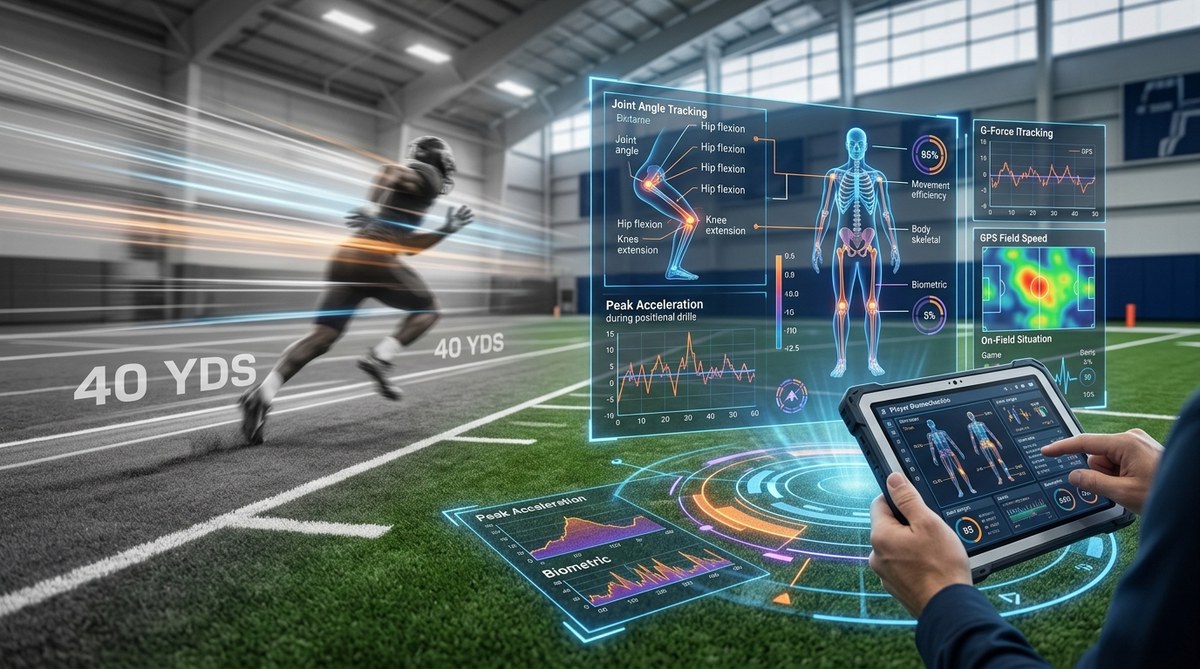
Every prospect at the Combine now wears a GPS tracker for position-specific drills. This data creates an acceleration curve showing how quickly a player reaches top speed and how well they maintain it.
- Why it matters: A player with a steep acceleration curve can win in the first three steps. This is more valuable for a cornerback breaking on a route than a top speed that takes 30 yards to reach.
- The 2026 trend: Scouts compare acceleration rates from the first 5 yards and the final 5 yards of a sprint to identify players who fade late.
3. Position-Specific Agility Drills
The old 20-yard shuttle and three-cone drill are still around, but they have been upgraded. In 2026, teams use custom drills that mimic specific offensive or defensive schemes.
- For cornerbacks: A drill that requires a 10-yard backpedal, a hip flip, and a 15-yard sprint at a 45-degree angle.
- For offensive linemen: A lateral shuffle that measures reaction time to a simulated pass rush move.
- For running backs: A gauntlet drill with pads that measures vision and change of direction under pressure.
4. In-Game Analytics
The most powerful shift might be the use of NFL Next Gen Stats from college seasons. Scouts now analyze a prospect’s college game film with AI tools that track separation, acceleration, and route efficiency.
- Why it matters: A player who runs a 4.5 forty but consistently creates separation in college is more valuable than a 4.3 sprinter who cannot get open.
- The 2026 trend: Multiple general managers have stated publicly that they weight in-game analytics higher than combine drills.
How Scouts Evaluate a Prospect Now
If you are trying to understand the modern scouting process, here is a numbered list of the steps teams take in 2026.
- Start with game film and AI analysis. The computer flags every snap where the player wins or loses based on separation, block sustain, and tackle efficiency.
- Review positional metrics from the Combine. Scouts look at force plate numbers and GPS acceleration curves before they look at the 40-yard dash time.
- Watch position-specific drills. Teams run their own drills at the Combine or at pro days to see how a player moves in scenarios that match their scheme.
- Compare combine data to in-game data. If a player is fast in a straight line but slow to react in game film, the straight line speed gets downgraded.
- Interview and mental evaluation. Teams still value the whiteboard session and the face-to-face meeting to gauge coachability and football IQ.
The Tools That Replaced the Stopwatch
Here is a bulleted list of the specific technologies and numbers you will hear scouts mention in 2026.
- Force plates: Measure peak force and rate of force development. Look for numbers above 3,000 Newtons for explosive players.
- GPS vests: Provide acceleration data at 100 Hz. Scouts look for a 0 to 10 mph time under 1.5 seconds.
- Motion capture cameras: Used for gait analysis to identify inefficiencies in running form.
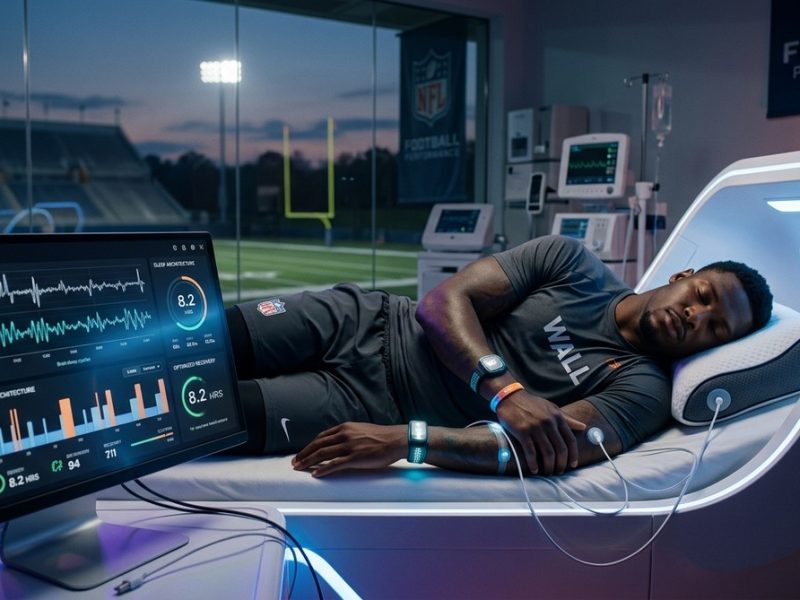
- Recovery metrics: Heart rate variability and sleep data are now part of the evaluation for durability.
- Cognitive reaction tests: Measure how fast a player processes a visual cue and reacts. This is big for quarterbacks and linebackers.
Comparing Old School and New School Metrics
The table below shows how traditional combine tests compare to the new metrics that scouts prefer in 2026.
| Traditional Test | What It Claims to Measure | New Metric That Replaces It | Why the New Metric Is Better |
|---|---|---|---|
| 40-yard dash | Straight line speed | GPS acceleration curve | Shows how fast a player gets to top speed, not just top speed itself |
| Vertical jump | Lower body power | Force plate peak force | Direct measurement of explosive output, not a height that can be technique-heavy |
| Bench press | Upper body strength | In-game block win rate | Strength on the field matters more than reps in a controlled setting |
| Three-cone drill | Agility and change of direction | Position-specific gauntlet drill | Mimics actual game movements instead of a generic pattern |
| Broad jump | Explosiveness | Rate of force development | Measures how quickly a player can apply force, which translates to first-step quickness |
What the Experts Are Saying
“We stopped drafting the 40-yard dash years ago. We draft football players. The 40 tells us if a guy can run fast in a straight line in shorts. It does not tell us if he can read a block, make a cut, or tackle someone in space. The new metrics give us a much clearer picture of who can actually play.” — Anonymous AFC Personnel Director, 2026 Combine Week
This sentiment is becoming the norm. Teams that have adopted these new metrics have seen better hit rates in the second and third rounds, where the 40-yard dash often misled evaluators.
How This Changes the Draft for Fans
If you are a fan watching the draft in 2026, you will hear different language from the broadcast teams. Instead of just hearing “he ran a 4.4 forty,” you might hear “his force plate numbers were in the 95th percentile” or “his acceleration curve shows elite first-step quickness.” This shift makes the draft more interesting because it rewards players who are simply good at football, not just good at sprinting.
For fantasy football managers, this is also useful. Understanding which rookies have strong in-game analytics can help you spot sleepers who might outperform their draft position. Check out our guide on how real-time football data gives fantasy players a genuine edge for more on that.
What This Means for Young Athletes
If you are a high school or college player hoping to make the NFL, do not obsess over your 40-yard dash time. Focus on building explosive power through proper lifting and plyometrics. Work on your acceleration out of cuts. Train your ability to read and react, not just run. The scouts of 2026 are looking for football athletes, not track stars.
You can also look into how to build a personalized training plan that adapts to your body’s signals to get ahead of the curve. And if you want to understand the bigger picture, read about the top 10 emerging sports trends you need to watch in 2026.
The Final Verdict on the 40-Yard Dash
The 40-yard dash is not obsolete. It still has a place, especially for evaluating deep threats at wide receiver and edge rushers who need to turn the corner. But it is no longer the centerpiece of NFL scouting. The new metrics are here, and they are here to stay. They offer a more complete, more honest look at what a player can do on the field.
Next time you watch the Combine, pay attention to the force plate numbers and the GPS data. That is where the real story of the 2026 draft class lives. The stopwatch is just background noise now.