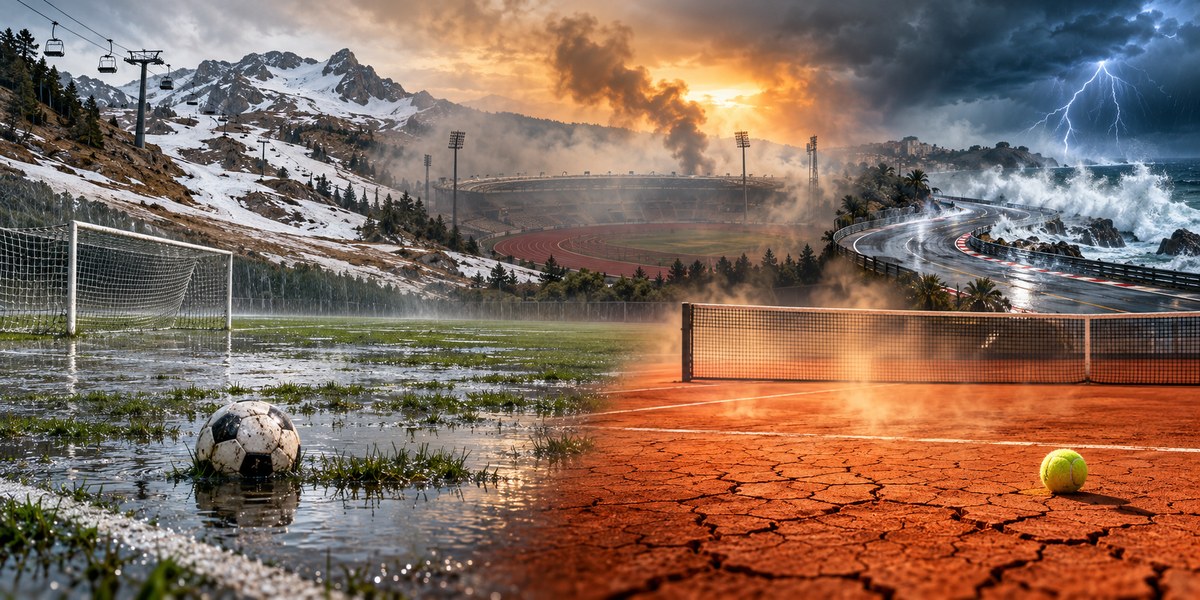
The 2026 sports calendar is starting to look like a game of Tetris played by a committee of meteorologists. Major leagues, international federations, and local event organizers are all scrambling to adapt to a new reality. It is not just about a few rain delays anymore. The fundamental timing of when and where we play sports is being rewritten by the weather. For sports journalists tracking the shifts and event planners trying to secure venues, the changes are both alarming and fascinating. Let us look at the five most unexpected ways climate change is redefining the 2026 sports calendar.
Climate change is no longer a distant threat to the sports world. In 2026, it is actively reshaping the global calendar. Winter sports rely on artificial snow, summer events move to cooler months, and heatwaves force night games. These five shifts show how leagues and organizers are adapting to keep athletes safe and competitions alive.
Winter Sports Start Earlier (and End Later)
The most visible shift is happening in winter sports. The 2026 Milan-Cortina Winter Olympics will rely on millions of pounds of manufactured snow, as warming temperatures and snowfall droughts make winter conditions less reliable. But the change goes beyond the Olympics. The World Cup ski circuit has already started its season in October for some events, pushing back into late spring for others.
Why does this matter for the calendar? Traditional windows for winter sports are shrinking. In the United States, the typical ski season at resorts in Colorado and Vermont now starts later and ends earlier. However, the professional competition calendar is doing the opposite. It is stretching out. Organizers are scheduling events across a wider timeframe to catch the few reliable cold snaps.
This creates a ripple effect. If the ski season runs from October to May, it conflicts with spring baseball training and the tail end of the NHL playoffs. Venues that used to sit empty in November are now booked for World Cup events. The 2026 sports calendar is getting more crowded, and winter sports are taking a bigger slice of the year.
Summer Marathons Move to Spring and Fall
Heat is the silent enemy of endurance sports. In 2026, traditional summer marathons are being rescheduled at an alarming rate. The Boston Marathon, held in April, is relatively safe for now. But events in the southern United States are making big changes.
Consider the Chicago Marathon. It is typically held in October, which is already a smart choice for avoiding summer heat. But smaller races in places like Phoenix, Austin, and Atlanta are shifting from June to November. The reasoning is simple. Wet bulb temperatures, which measure heat stress on the human body, are hitting dangerous levels during June and July.
Race directors now have a new priority list when planning their calendar:
- Check historical wet bulb data for the proposed weekend.
- Identify a backup weekend at least four weeks later in the calendar.
- Secure permits for both dates with the local city government.
- Notify runners of the primary date and the potential for a last minute shift.
- Communicate the heat safety plan in all pre race materials.
This process is becoming standard for any outdoor endurance event. The days of a fixed summer race date are fading. Flexibility is the new normal.
The Australian Open and the Heat Policy
Tennis is another sport feeling the heat. The Australian Open, held in January during the southern hemisphere summer, has a well known heat policy. Play stops when the temperature hits a certain threshold. In 2026, organizers are considering moving the tournament to March.
This is a massive shift for the global tennis calendar. The Australian Open is the first Grand Slam of the year. If it moves to March, it will crowd the calendar alongside the French Open and Wimbledon. Players will have to adjust their training cycles and travel plans. Fans will have to rethink their viewing habits.
The change is not just about comfort. It is about athlete safety. Heat stroke is a real risk for players on court. The 2026 season is seeing more matches delayed or moved to night sessions. The calendar is no longer a simple list of dates. It is a living document that responds to the weekly weather forecast.
Football Fields Are Melting (Literally)
American football is a fall and winter sport by tradition. But the preseason and early regular season games in August and September are becoming a health hazard. Fields in the southern United States, from Texas to Florida, are seeing surface temperatures that can cause burns and heat exhaustion.
In 2026, several NFL teams are pushing for a later start to the season. The idea is to move the first few weeks of games to mid September or even October. This would push the Super Bowl later into February, which creates a conflict with the Winter Olympics and the NBA playoffs.
The table below shows how the 2026 calendar might shift for a typical NFL team based in a hot climate:
| Month | Traditional Schedule | 2026 Adjusted Schedule | Reason |
|---|---|---|---|
| August | Preseason games | Indoor practices only | Surface heat risk |
| September | Regular season starts | Start mid September | Cooler temperatures |
| December | Regular season ends | Regular season ends | Minimal change |
| January | Playoffs begin | Playoffs begin | Minimal change |
| February | Super Bowl | Super Bowl moved to late Feb | Avoids conflict with rescheduled games |
The financial impact is huge. Television contracts are built around specific dates. Moving the Super Bowl means shifting a multi billion dollar advertising machine. Yet, the safety of players is forcing the conversation. The 2026 sports calendar is being pulled in two directions: tradition and survival.
Golf Tournaments Go North (and Night)
Golf is a sport that prides itself on tradition. The Masters is always the first full week of April. The US Open is in June. The Open Championship is in July. But heat waves and drought are changing the game.
Courses in Arizona and California are struggling to stay green. Water restrictions are forcing some courses to close for parts of the summer. In 2026, the PGA Tour is experimenting with a new strategy. They are moving summer events to courses in the Pacific Northwest, Canada, and the northern Midwest. These regions have cooler summers and more reliable water supplies.
At the same time, night golf is becoming more popular. Tournaments are starting at 6 PM or 7 PM to avoid the peak heat of the day. This changes the entire viewing experience for fans. It also changes the way players prepare. A tee time at 8 PM means a completely different warm up routine than a 9 AM start.
“We are seeing a fundamental shift in where and when golf can be played. The old calendar was based on geography and tradition. The new calendar is based on climate data and water rights,” says Dr. Elena Rossi, a sports climatologist at the University of Oregon.
How Event Planners Can Adapt in 2026
If you are an event planner or a sports journalist covering these changes, you need a new set of tools. Here is a checklist of strategies being used by successful organizers in 2026:
- Build climate resilience into your venue contract. Include clauses for heat related delays or rescheduling.
- Invest in real time weather monitoring technology. Do not rely on the local news. Use hyper local data.
- Create flexible staffing models. Have a plan for a sudden shift from day to night operations.
- Communicate early and often with attendees. Transparency builds trust when schedules change.
- Consider hybrid or virtual options for events that are most at risk from weather.
These steps are not optional anymore. They are the cost of doing business in a changing climate.
The New Rules of the Game
The 2026 sports calendar is a reflection of a planet in transition. It is not just about rescheduling a few games. It is about rethinking the very structure of competition. Leagues that adapt will thrive. Those that cling to old dates will face empty stands and unsafe conditions.
For fans, this means a more unpredictable viewing experience. For athletes, it means a more demanding training schedule. For everyone involved, it means accepting that the old calendar is gone. The new one is written in pencil, and the weather holds the eraser.
If you are interested in how these trends connect to the broader world of athletics, check out our piece on top 10 emerging sports trends you need to watch in 2026. For a closer look at how venues are responding, read about why sustainability is scoring big in stadium design for 2026. And for a deeper understanding of how training is evolving, see our article on how technology is revolutionizing athlete training and performance.
Staying Ahead of the Curve
The relationship between climate change and the sports calendar is still evolving. What we see in 2026 is just the beginning. The best thing you can do as a fan, planner, or journalist is to stay informed and stay flexible. Pay attention to the data. Listen to the athletes. And remember that the schedule is a tool, not a rule. It exists to serve the sport, not the other way around.
Next time you look at a sports calendar for 2026, ask yourself one question: what will the weather be like that day? The answer might surprise you. And it might change the way you watch the game.