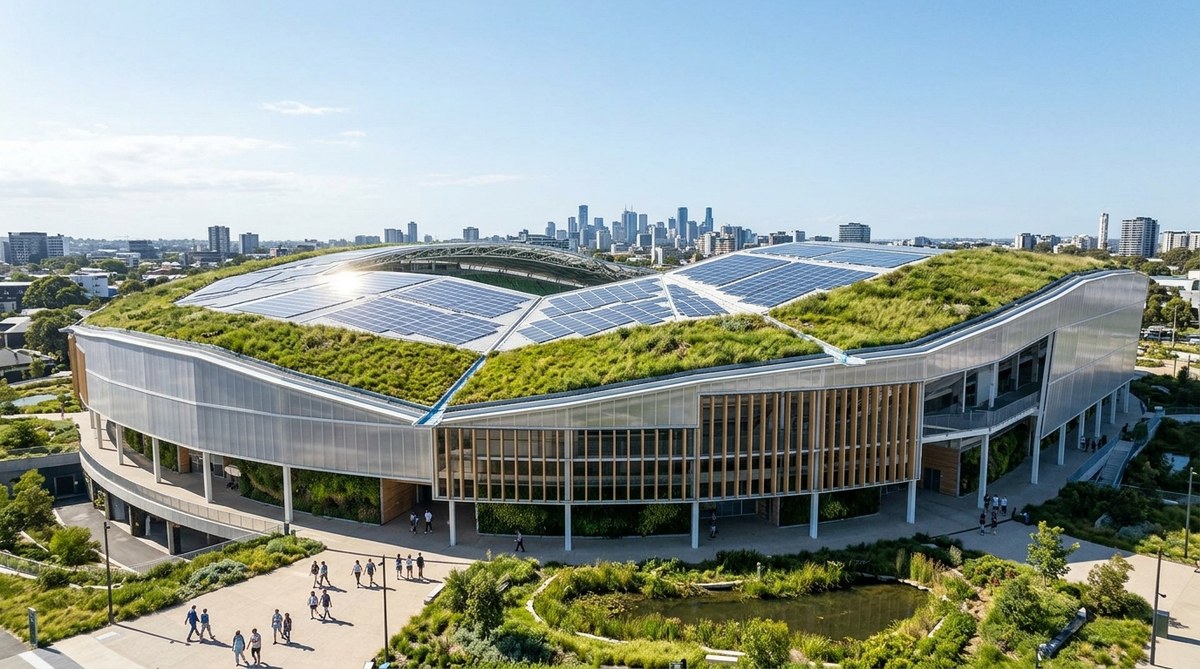
The roar of 70,000 fans, the smell of fresh grass, and the thrill of a last-minute goal. That’s the magic of a World Cup match. But behind the scenes, stadiums are undergoing a quiet revolution. In 2026, when the FIFA World Cup arrives in North America, the venues hosting the games won’t just be architectural marvels — they will be living, breathing examples of sustainable stadium design 2026. From solar-powered roofs to zero-waste concession stands, the pressure is on to build arenas that thrill crowds without costing the planet. And the results are already scoring big.
Sustainable stadium design in 2026 goes beyond solar panels and recycling bins. It means integrating passive cooling, carbon-negative materials, and smart energy systems that lower operating costs by up to 40%. For architects and facility managers, the goal is to create venues that are resilient, efficient, and fan-friendly while meeting FIFA’s strict sustainability criteria. This guide breaks down the top strategies, common pitfalls, and real-world examples that prove green design wins.
Why 2026 Is the Turning Point for Green Stadiums
For decades, stadiums were built with one priority: capacity. Energy efficiency came second. But the 2026 FIFA World Cup changed the game. FIFA’s own sustainability strategy demands that host venues achieve ambitious environmental targets. Add to that rising energy costs, stricter building codes, and a fan base that increasingly expects climate-conscious action, and you get a perfect storm for innovation.
This year, we are seeing a surge in net-zero and carbon-positive stadium designs across the United States, Mexico, and Canada. These aren’t just retrofits. Many are brand new facilities built from the ground up with sustainability baked into every beam and bolt. The shift is not only smart for the planet — it saves money and builds goodwill. As Gensler’s design principal recently said, “A stadium that adapts to its climate is a stadium that lasts.”
The Core Principles of Sustainable Stadium Design
If you are an architect or facility manager planning a 2026 project, start by focusing on four pillars:
- Passive design: Use the site’s natural orientation, wind patterns, and shade to reduce heating and cooling loads. A well-oriented stadium can cut HVAC energy by 30% without spending a dime.
- Renewable energy integration: Solar arrays, geothermal loops, and even kinetic energy from fans can power lighting, screens, and field maintenance.
- Water conservation: Rainwater harvesting and greywater recycling are becoming standard. Some stadiums now treat and reuse 100% of their water on site.
- Material selection: Low-carbon concrete, recycled steel, and sustainably harvested timber reduce embodied carbon. Several 2026 venues are tracking their carbon footprint using digital material passports.
These principles aren’t just theory. They are being applied right now in stadiums like SoFi Stadium in Los Angeles, which uses a massive on-site water recycling system, and the new Estadio Akron in Guadalajara, where a green roof and solar panels cut energy use by 40%.
A Practical Plan: 5 Steps to Implement Sustainable Stadium Design
For teams starting a new project or retrofitting an older venue, here is a numbered checklist to guide the process.
-
Conduct a site-specific climate analysis. Every stadium sits in a unique microclimate. Use weather data and simulation tools to model sun paths, prevailing winds, and rainfall. This will inform everything from roof orientation to natural ventilation placement. For example, in hot, dry climates like Phoenix, shading and evaporative cooling should be prioritized.
-
Set a net-zero energy target from day one. Don’t treat sustainability as an afterthought. Decide early whether the stadium will aim for LEED Platinum, Passive House certification, or a custom carbon budget. This commitment forces the entire design team to innovate. Many 2026 venues now require that at least 50% of energy comes from on-site renewables.
-
Design for flexibility and future upgrades. Stadiums are used for decades. Choose systems that can be updated easily. For instance, modular solar panels and battery storage allow for incremental expansion. Also, plan for electric vehicle charging stations and future hydrogen fuel cells. The stadiums built today should still be efficient in 2046.
-
Integrate smart water management. Install rainwater collection, low-flow fixtures, and real-time leak detection. Use native landscaping that requires minimal irrigation. Some new designs even include on-site treatment wetlands that clean water naturally and provide a habitat for local wildlife.
-
Engage the supply chain early. Work with contractors who prioritize green materials. Demand Environmental Product Declarations (EPDs) for concrete, steel, and insulation. Consider carbon offsets only as a last resort — the real win is reducing emissions at the source.
Common Mistakes vs. Best Practices in Green Stadium Construction
Even with the best intentions, teams sometimes fall into traps. The table below outlines what to avoid and what to aim for.
| Common Mistake | Best Practice |
|---|---|
| Relying only on offset credits instead of reducing on-site energy use. | Install enough solar capacity to cover peak demand; use battery storage for night games. |
| Choosing cheap, high-carbon concrete to save upfront costs. | Use low-carbon concrete mixes with fly ash or slag; the same strength at lower carbon footprint. |
| Glass-heavy facades that cause overheating. | Optimize glazing with high-performance coatings and external shading fins. |
| Ignoring transportation emissions from fan travel. | Locate stadiums near public transit hubs and provide incentives for carpooling. |
| Designing a one-size-fits-all energy system without considering local climate. | Tailor HVAC and insulation to the specific region (e.g., cooling towers in humid areas). |
Expert Advice from a Leading Stadium Architect
“The biggest myth is that sustainable stadiums cost more. They don’t — especially when you look at the 30-year operating budget. In our projects, investing in energy efficiency and renewables has reduced annual utility bills by 25 to 40 percent. The real challenge is breaking down silos between architects, engineers, and contractors. When everyone works together from the start, you can build a stadium that performs like a living organism. It breathes, it saves water, and it generates its own power.” — Maria Torres, Principal at HKS Sports & Entertainment
How the 2026 World Cup Is Driving Innovation
The tournament’s cross-border format — with games in the U.S., Canada, and Mexico — means designers must adapt to three distinct climates. That diversity is a breeding ground for innovation. For example, at the new stadium in Toronto, engineers are testing a geothermal system that uses the lake’s stable temperature for heating and cooling. Meanwhile, in Mexico City, a venue is incorporating a double-skin roof that reduces heat gain while letting in natural light.
Beyond the physical building, technology plays a huge role. Smart sensors monitor air quality, occupancy, and energy use in real time. Artificial intelligence predicts demand for lighting and HVAC, automatically adjusting to save power. These systems are becoming standard in sustainable stadium design 2026. For a deeper look at how tech is reshaping sports, read our article on how technology is revolutionizing athlete training and performance.
The Fan Experience and Sustainability Go Hand in Hand
One fear about green stadiums is that they might feel less comfortable or less exciting. But the opposite is true. Better natural ventilation means fresher air. More efficient LED lighting creates better visibility for fans at home and in the stands. And rainwater harvesting prevents turf from drying out, keeping the field in top condition.
Fans are also becoming active participants. Many stadiums now offer app-based incentives for using reusable cups, taking public transit, or donating to carbon offset programs. The result is a game day experience that feels both modern and responsible. Check out our piece on top 10 emerging sports trends you need to watch in 2026 to see how fan engagement is evolving.
A Look Ahead: Stadiums as Community Hubs
Sustainable design isn’t just about what happens inside the stadium. It’s about how the venue connects with its surroundings. More 2026 projects are including public green spaces, bike paths, and accessible plazas that serve the community year round. These “living stadiums” reduce the urban heat island effect, support local biodiversity, and provide recreational space long after the final whistle blows.
As environmental advocates point out, the sports industry has a massive platform. When a stadium goes green, it sends a message to millions of fans. It shows that sustainability is not a sacrifice — it’s an upgrade.
Your Next Play: Act on These Ideas Today
Whether you are breaking ground on a new venue or upgrading a 20-year-old arena, the time to act is now. Start with one pillar: conduct that climate analysis, set a bold energy target, or switch to low-carbon concrete. Small steps compound into massive impact.
For more insights on staying active and healthy in the real world, check out our guide on top strategies for staying healthy and active in a busy lifestyle. And if you are interested in the technology side, don’t miss our look at how artificial intelligence is revolutionizing healthcare in 2026 — the same AI principles are being adapted for stadium energy management.
Remember: the greenest stadiums are the ones that are built, used, and loved for generations. By embracing sustainable stadium design 2026, you’re not just preparing for the World Cup. You’re building a legacy.