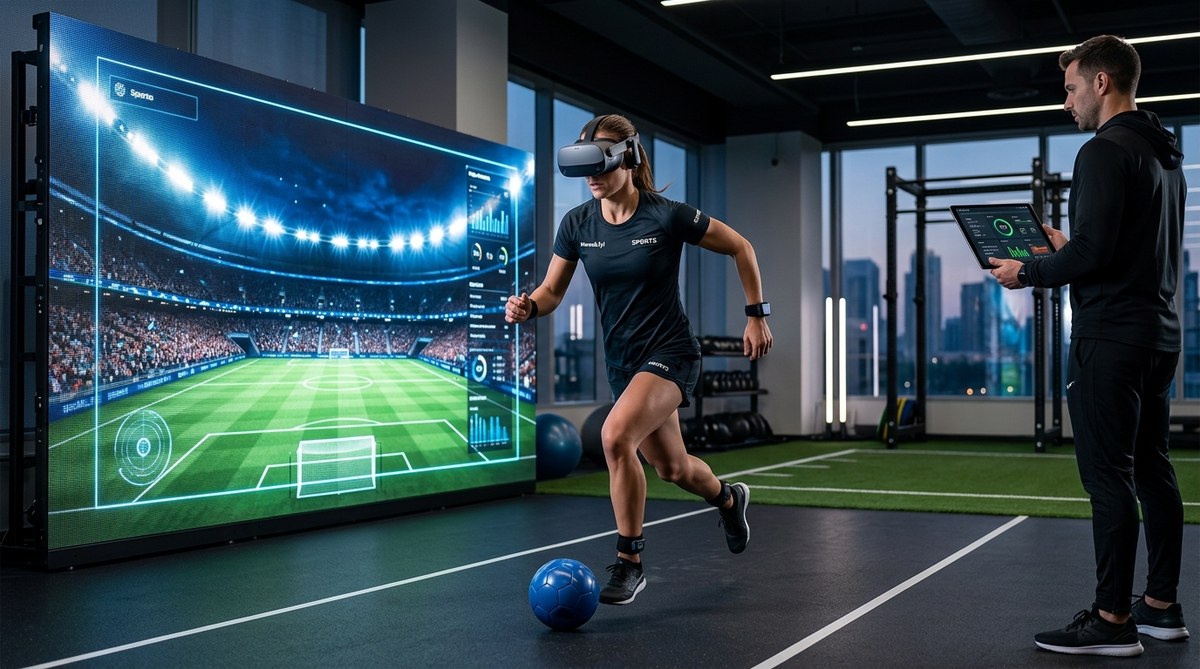
A quarterback drops back in the pocket. A defender blitzes from the blind side. The QB steps up, scans the field, and fires a strike to a receiver breaking across the middle. No one gets hit. No one even sweats. This play happened entirely inside a virtual reality headset. In 2026, athletes at every level are strapping on VR goggles to sharpen their skills without stepping onto a real field. But can this technology truly replace the sweat, grit, and physical adaptation of traditional training? The answer is more nuanced than a simple yes or no.
Virtual reality sports training is a powerful supplement, not a full replacement for traditional methods. It excels at cognitive repetition, decision making, and safe skill rehearsal. But it cannot build muscle, develop coordination with real equipment, or replicate the chaotic physicality of live competition. The best results come from a hybrid model that blends VR drills with real world practice.
The State of VR in Sports Today
Walk into any major college football facility in 2026 and you will likely see a room dedicated to VR training. Quarterbacks run through defensive looks. Linebackers practice reading formations. At the professional level, NBA teams use VR to simulate game speed, letting players practice catching passes and reading defenses without the wear and tear of a full court session.
The technology has come a long way since the early days of clunky headsets and choppy graphics. Modern VR systems offer near lifelike visuals, low latency tracking, and haptic feedback that simulates the feel of a ball or opponent contact. Prices have dropped too. A quality consumer headset now costs less than a pair of high end basketball shoes. That makes it accessible for high school athletes and weekend warriors alike.
But the big question remains: can it replace the real thing? To answer that, we need to look at where VR truly shines and where it still falls short.
Where VR Shines
- Repetition without injury. You can run a drill 100 times in a row without straining joints or risking a concussion. That is huge for quarterbacks, soccer goalies, and pitchers.
- Cognitive load training. VR can overload your senses with defenders, crowd noise, and changing scenarios. This forces you to process information faster and make split second decisions.
- Game scenario immersion. You can practice the final two minutes of a tied playoff game in a virtual arena with realistic crowd pressure.
- Film study replacement. Instead of sitting in a dark room watching a screen, you can step into the play and see it from the athlete’s perspective.
- Home workout integration. When weather or schedules keep you off the field, VR offers a structured workout that still challenges your mind and (to a degree) your body.
For sports like boxing, martial arts, and tennis, VR lets you spar with a virtual opponent who has a different stance, timing, and strength level every round. That kind of variety is hard to get in a traditional gym.
Where VR Falls Short
Let’s be honest: VR cannot make you stronger, faster, or more conditioned. A VR sprint will not improve your actual stride mechanics. A virtual bench press does not exist. The table below breaks down where VR training compares to traditional training for key athletic qualities.
| Skill or Attribute | Virtual Reality Training | Traditional Training |
|---|---|---|
| Decision making | Excellent. Repetition of game scenarios speeds up mental processing. | Good but limited by practice reps and opponent availability. |
| Muscle strength | None. No load on muscles. | Essential for building power and injury resistance. |
| Tactile feel (ball control, catching) | Limited. Haptic feedback is improving but still not real. | Critical. Real objects teach grip, spin, and weight transfer. |
| Conditioning and endurance | Low. Heart rate can rise from mental stress, but not like a real run. | Directly builds cardiovascular fitness and lactate tolerance. |
| Spatial awareness in real environments | Good for virtual arenas, but does not translate to uneven ground, wind, or lighting. | Real environments teach adaptation to changing conditions. |
| Social and team chemistry | None. You are alone in the headset. | Essential for communication, trust, and nonverbal cues. |
The bottom line: VR is a mental gym, not a physical one. If you stop lifting, running, and practicing with actual equipment, your performance on the field will drop.
The Hybrid Training Approach
Smart coaches in 2026 are using a blended model. They treat VR as a high intensity cognitive supplement that slots into a traditional training schedule. Here is a simple three step process to integrate VR without overcomplicating things.
- Schedule VR sessions on recovery days. After a hard practice or game, your body needs rest but your mind can still work. Use 15 to 20 minutes of VR to review plays and sharpen reactions without taxing your muscles.
- Use VR for pregame mental rehearsal. The night before a match, run through the first quarter in VR. See yourself making the right reads and reacting to pressure. This primes your nervous system for game speed.
- Combine VR with physical drills. Practice a move in VR, then immediately step onto the field or court and rehearse it with real equipment. The mental blueprint transfers faster than you think.
For athletes with busy schedules, VR can also fill a gap when you cannot get to the gym. Read about how technology is revolutionizing athlete training and performance to see how other tools pair with VR.
Expert Insight
“The athletes who improve the fastest are the ones who use VR not as a crutch but as a force multiplier. It gives them five extra reps for every one real rep, with zero physical cost. But if they stop doing the real reps, the VR advantage disappears within two weeks.”
— Dr. Kelsey Hart, sports psychologist and VR training consultant for three MLB teams (2026 interview)
That quote sums up the consensus among experts. VR is not a shortcut. It is a smarter way to spend your mental energy so that your physical training time becomes more productive.
Is VR a Replacement or a Tool?
If you are a coach building a training program for 2026, do not throw out your practice plans. Instead, ask yourself: where do my athletes waste the most mental energy? If your quarterback struggles reading coverages, VR can give them 50 extra looks in 20 minutes. If your soccer striker hesitates in the box, VR can put them in front of goal against a virtual keeper again and again.
But if you need to improve their sprint mechanics, lateral quickness, or hand eye coordination with a real ball, nothing beats the old school drills. The best thing VR does is accelerate learning. It reduces the number of live repetitions needed to master a concept. That means less wear and tear on the body and faster development.
This hybrid approach is one of the top 10 emerging sports trends you need to watch in 2026. It is changing how athletes prepare at every level.
Building Your VR Training Plan for 2026
Ready to try it? Here are a few tactical tips to make VR work for you.
- Start with a sport specific app. Some platforms now offer modules for football, basketball, tennis, soccer, and boxing. Choose one that matches your position or event.
- Set a time limit. 20 minutes max per session. Longer than that and your brain fatigues, leading to sloppy habits.
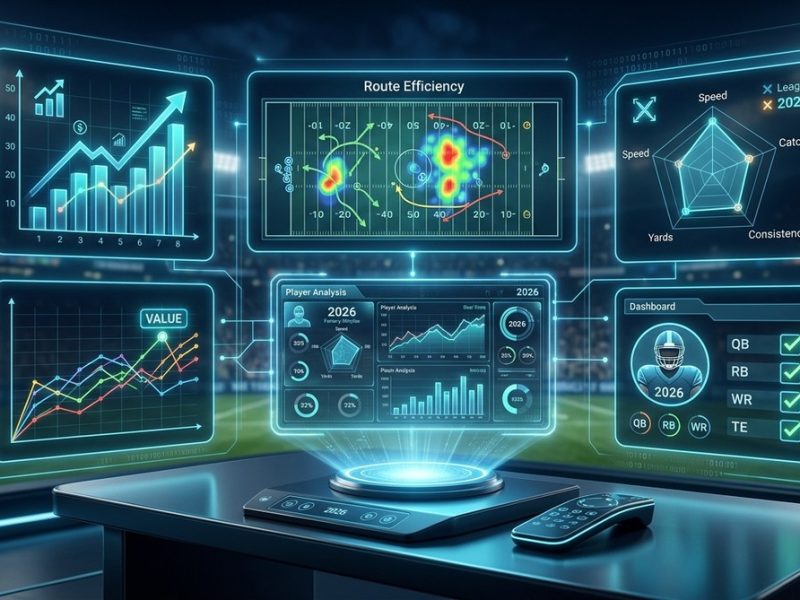
- Track your progress. Many VR systems log reaction times, accuracy, and decision quality. Use that data to spot weaknesses.
- Pair VR with recovery like foam rolling or light stretching. Check out 5 essential recovery techniques every athlete should know in 2026 for ideas.
If you are coming off an injury, VR is a godsend. You can train your mind while your body heals. Is wearable tech the key to avoiding sports injuries? explores how sensors and VR combine to prevent problems before they happen.
The Real Outcome of Virtual Reality Sports Training
So, can virtual reality replace traditional sports training? Not entirely. Not yet. But it can make traditional training vastly more efficient. For coaches, the smartest move is to embrace VR as a supplemental tool that sharpens the mental side of the game while leaving the physical grind to real practice.
Athletes who adopt this hybrid model will see faster skill acquisition, fewer injuries, and sharper performance under pressure. And that is a win no matter how you look at it.
Start small. Add one VR session per week. See how it changes your focus during actual drills. You might be surprised at how quickly those virtual reps translate to real results.