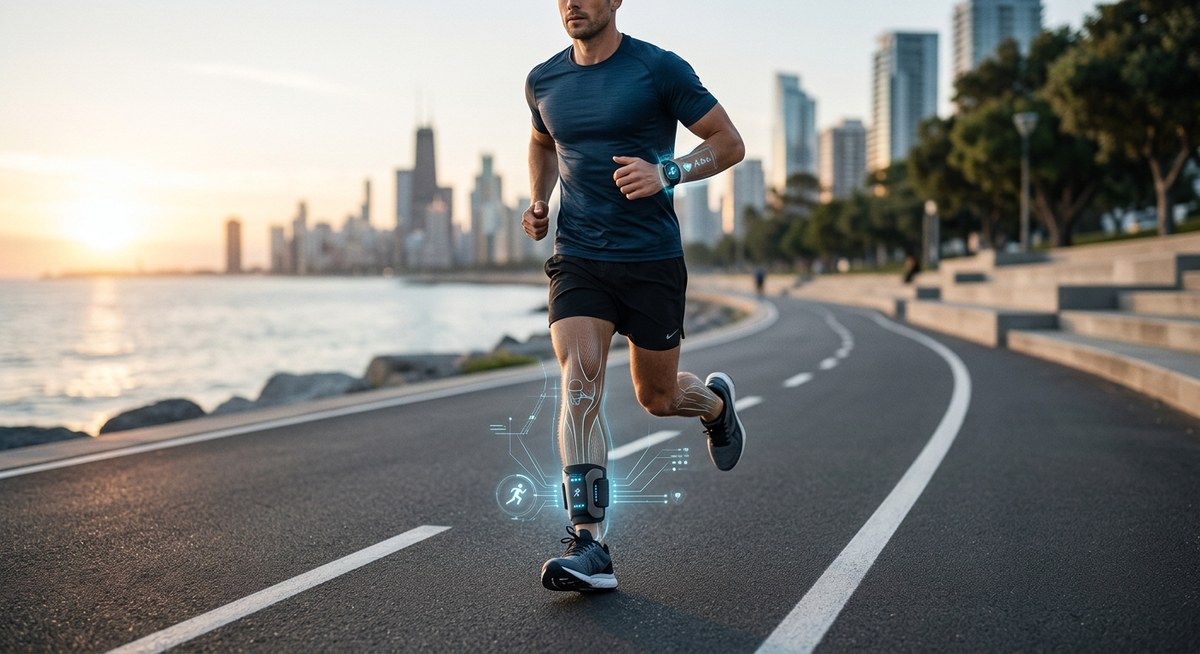
The number on your wrist or the sensor in your shoe might be the best teammate you have never had. For years, wearable technology was mostly about steps and sleep scores. But in 2026, the game has changed. Athletes from weekend warriors to professionals now rely on devices that do not just track performance. They actively prevent injuries. Strains, sprains, and overuse injuries are not random. They follow patterns. Wearable tech preventing sports injuries works by catching those patterns early, sometimes weeks before you feel the first twinge. The result is more time training and less time on the sidelines.
Wearable technology has moved beyond step counting. In 2026, athletes use smart sensors, AI powered analysis, and real time feedback to spot injury risks before they become problems. From smart insoles that measure gait to vests that track muscle load, these devices help prevent common sports injuries. This article breaks down how wearables work, which features matter most, and how you can use them to stay in the game longer and perform at your best.
Why Athletes Are Turning to Wearable Sensors
The old approach to injury prevention relied on feel. You waited until something hurt. Then you rested, iced, and hoped for the best. That reactive model costs athletes millions of lost training hours every year. In fact, according to the National Athletic Trainers Association, nearly half of all sports injuries are preventable with proper monitoring and load management.
Wearable technology fills that gap. Instead of guessing, you get data. Instead of wondering if you pushed too hard, your device tells you. This shift is not just about convenience. It is about changing the entire mindset from reactive to proactive care. The idea that wearable tech preventing sports injuries is a gimmick has faded. The evidence is too strong now.
Professional teams in the NFL, NBA, and MLB have embedded wearable sensors into daily training for years. But the price has dropped. In 2026, the same technology is available to high school athletes, recreational runners, and gym goers. That is the real story. The tools that once cost tens of thousands of dollars now fit inside a hundred dollar device.
How Wearable Tech Prevents Injuries Before They Happen
To understand the power of these devices, you need to know how injuries actually occur. Most injuries are not caused by a single bad landing or one awkward twist. They build up over time. Muscle imbalances, poor form, and excessive load accumulate until something gives. Wearable tech preventing sports injuries monitors these hidden factors continuously.
Real Time Biomechanical Analysis
Smart insoles and sensor equipped sleeves measure how your foot strikes the ground, how your knee tracks, and how your hips rotate. When a runner lands with excessive supination or a lifter shifts weight unevenly during a squat, the device flags it. You get a buzz or an alert on your phone. In that moment, you can adjust your form before the movement becomes a habit.
A 2025 study published in the Journal of Athletic Training found that runners who used real time gait feedback reduced their injury rate by 43 percent over six months. The feedback did not come from a coach. It came from a small sensor clipped to their shoe.
Load Management and Recovery Tracking
Overtraining is one of the biggest injury risks. A device that tracks your heart rate variability, sleep quality, and cumulative training load can tell you when your body is not ready for another hard session. Many wearables now calculate a metric called “acute to chronic workload ratio.” If your recent training spikes too high compared to your baseline, the system warns you to back off.
This kind of insight is invaluable for athletes who are motivated to push harder. Sometimes the smartest move is to do less. A wearable helps you recognize those moments.
Coaches and trainers are also using this data to design smarter programs. Instead of following a generic plan, athletes receive personalized adjustments based on their daily readiness. You can learn more about how data driven training is reshaping athletics in our guide on how technology is revolutionizing athlete training and performance.
Smart Alert Systems
Some of the newest devices do not wait for you to look at a screen. They use haptic feedback to nudge you during activity. If your running cadence drops too low, your smartwatch buzzes. If your lifting bar path drifts, a clip on sensor vibrates. This real time coaching reduces the need for constant video review or a human coach watching every rep.
For team sports, vests with embedded sensors track collision impact and rotational force. A soccer player who takes a hard blow to the head might get flagged for a cognitive check before they insist they are fine. This application alone has changed concussion protocols across youth leagues.
Wearable Technologies Making a Difference in 2026
Not all wearables are created equal. Some are better suited for certain sports and certain injury types. Here is a breakdown of the main categories and what they do best.
| Device Type | Primary Function | Best For |
|---|---|---|
| Smart insoles | Gait analysis, pressure mapping | Runners, basketball players, walkers |
| Sensor sleeves | Joint angle tracking, muscle activation | Weightlifters, tennis players, pitchers |
| Impact monitoring vests | Collision tracking, force measurement | Football, rugby, hockey, soccer |
| AI coaching apps | Form analysis via camera, rep counting | Home gym users, yoga, Pilates |
| Recovery rings | HRV, sleep, body temperature | All athletes focused on load management |
Each device type serves a specific purpose. A runner might benefit most from smart insoles. A linebacker needs impact monitoring. The key is matching the tool to the risk. A mismatch is common. Many athletes buy a general fitness tracker and expect it to prevent injuries. It will not. The device must be designed for your sport and your specific injury history.
If you are curious about what is coming next, check out our list of top 10 emerging sports trends you need to watch in 2026. The wearable space is evolving fast.
A Practical Guide to Using Wearables for Injury Prevention
Getting the most out of a wearable requires more than just putting it on. You need a process. Here is a simple step by step approach that works for most athletes.
-
Set your baseline. Wear the device for two weeks without changing your routine. Let it learn your normal heart rate, sleep patterns, and activity levels. This baseline is the foundation for all future alerts.
-
Define your injury history. Does your device allow you to mark past injuries? Some apps let you flag a weak ankle or a previous hamstring tear. The AI then pays closer attention to that area.
-
Follow the alerts. When the device tells you to slow down or adjust your form, listen. The hardest part for many athletes is trusting the data over their ego.
-
Review weekly trends. Do not just look at daily numbers. The real value comes from patterns. Is your HRV dropping over several days? That is a warning sign regardless of how you feel that morning.
-
Adjust training accordingly. If the workload ratio shows a spike, swap a hard run for active recovery or a mobility session. One easy day is much better than two weeks off with an injury.
This process turns a passive gadget into an active injury prevention system. Many athletes who follow these steps report fewer missed days and less time visiting physical therapists.
Common Mistakes Athletes Make with Wearable Tech
Even the best technology fails if you use it wrong. Here are the most common pitfalls that reduce the effectiveness of wearable tech preventing sports injuries.
- Ignoring the data when it conflicts with how you feel. Feeling great does not mean your body is recovered. Data often catches imbalances before you sense them.
- Using the wrong device for your sport. A general fitness watch cannot measure gait symmetry or joint loading. Buy a device designed for your activity.
- Not updating firmware or calibration. Sensors drift over time. Regular calibration keeps readings accurate.
- Relying on the device instead of a professional. Wearables are tools, not doctors. If you get persistent alerts, see a sports medicine specialist.
- Chasing metrics instead of focusing on movement. If you obsess over your numbers, you might change your form in unnatural ways. Use data as a guide, not a dictator.
Avoiding these mistakes makes the difference between a device that collects dust and one that actually keeps you healthy.
“The athletes who benefit most from wearable tech are the ones who treat the data as an early warning system, not a report card. If you wait until you are injured, you have already missed the window for prevention.” — Dr. Sarah Chen, sports medicine physician and advisor to USA Track and Field
This perspective matters. The technology is only as good as your willingness to act on it.
What the Evidence Shows So Far
The research on wearable tech preventing sports injuries has grown significantly over the last five years. A 2024 meta-analysis from the British Journal of Sports Medicine reviewed 37 studies and found that wearable based feedback reduced lower extremity injury risk by an average of 33 percent across all sports.
The strongest results appeared in running and team ball sports. In running, real time cadence feedback helped runners reduce impact forces. In soccer and basketball, load monitoring systems reduced overuse injuries by nearly half.
But there are limits. The same analysis noted that adherence drops over time. Athletes who stop wearing the device or stop charging it lose the benefit. Consistency is the single biggest factor separating success from failure.
For a broader look at how AI and sensor technology are improving health outcomes, read our article on how artificial intelligence is revolutionizing healthcare in 2026. The same algorithms that power wearable alerts are being used in hospital systems to predict patient falls and complications.
Making Wearable Tech Work for You
Deciding to use a wearable is the easy part. Integrating it into your routine is where the real work happens. Start with one device that targets your biggest risk. If you are a runner, buy smart insoles. If you lift heavy, get a sleeve that tracks your squat depth and bar path.
Set a reminder to check your weekly report every Sunday. Use that data to plan the next week’s training. Share it with your coach or trainer if you have one. The best results come from combining machine data with human expertise.
The field is moving fast. In 2026, we are seeing smart fabrics that monitor muscle oxygen levels and compression wear that measures swelling. These are not concepts anymore. They are on the shelves. The question is no longer whether wearable tech can prevent injuries. It is whether you choose to use it.
For a deeper look at the newest tools entering the market, we recommend reading about the discover the future of sports technology transforming athlete performance. The next generation of devices will be even more embedded and seamless.
Staying Ahead of Injuries with Data
Wearable tech preventing sports injuries is not a trend that will fade. It is becoming a standard part of how athletes train, recover, and protect themselves. The data is too convincing. The price is too accessible. And the benefit is too large to ignore.
Your body gives you signals every day. Sometimes those signals are quiet. Sometimes they get drowned out by adrenaline or ambition. A wearable does not replace your instinct. It amplifies it. It gives you a second opinion that never gets tired and never gets distracted.
The next time you lace up your shoes or step onto the field, consider adding one more piece of gear. Not for speed. Not for style. For the simple reason that staying healthy is the best performance strategy there is.