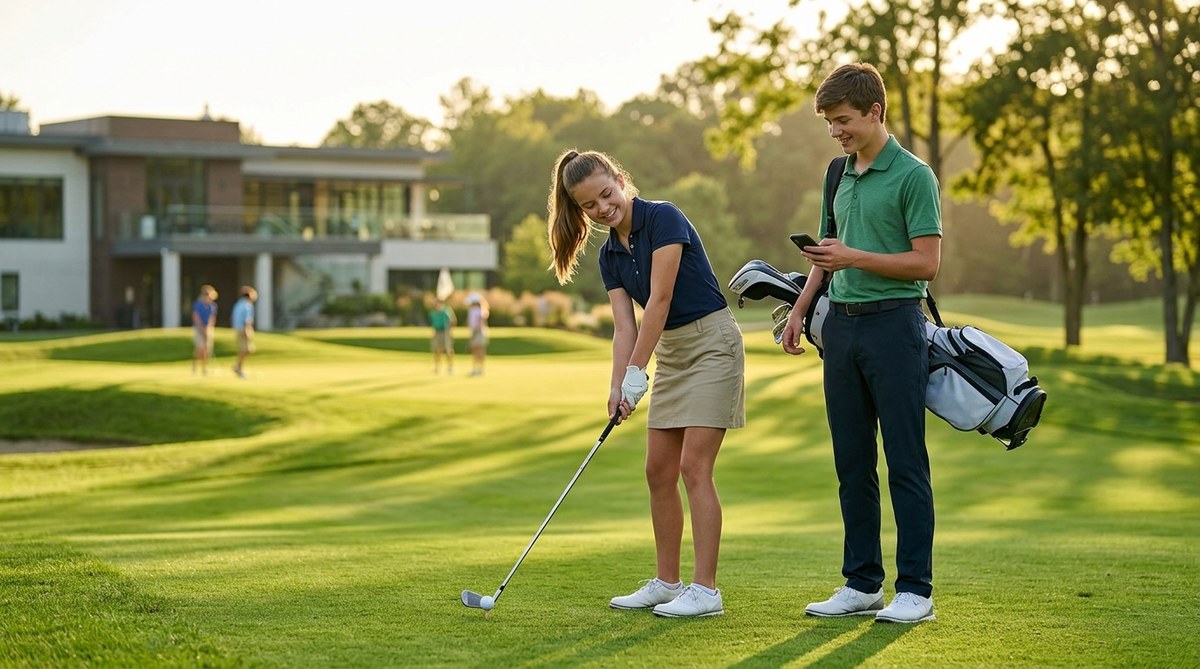
You are scrolling through your feed, and you see it everywhere. Kids at the driving range. Teens in golf gear at school. Your neighbor’s 10-year-old just got a set of clubs for their birthday. It is not your imagination. Golf has quietly become one of the fastest growing youth sports in America, and 2026 is the year it fully breaks into the mainstream. For parents looking for a sport that offers long term value, low injury risk, and real scholarship potential, this might be the move you have been waiting for.
Golf is no longer just a retirement hobby. In 2026, youth participation has surged thanks to inclusive programs, tech driven training tools, and a massive push from organizations like the PGA and LPGA. It offers a safe, lifelong sport with strong college scholarship pathways. For parents, the upfront cost in lessons and gear is now more accessible than ever, and the return on investment is real.
The Numbers Behind the Golf Boom in 2026
Let’s look at the data. According to the National Golf Foundation, youth participation (ages 6 to 17) has jumped by over 35 percent since 2020. In 2026 alone, more than 3.5 million kids in the United States played at least one round of golf. That is a massive shift from a decade ago.
Why now? A few key factors are driving this.
- School programs are expanding. More than 1,200 high schools added golf teams in the last three years.
- Accessible pricing. Used club markets and rental programs have lowered the barrier to entry.
- Media exposure. Stars like Nelly Korda and Scottie Scheffler are household names, and kids see them as cool.
- Tech integration. Launch monitors and golf simulators make practice feel like a video game.
When you compare golf to traditional youth sports like football or soccer, the safety profile alone is a huge win for parents. No concussions. No cuts from tryouts. Everyone gets to play.
Why Golf Is a Smart Investment for Your Child
You might be wondering if the cost is worth it. A full set of junior clubs, lessons, and range time can add up. But here is the thing. Golf offers something most youth sports cannot. A career for life.
Think about it. Your kid can play golf at 8 years old and still play at 80. It is a low impact sport that builds discipline, patience, and problem solving skills. Plus, it opens doors to college scholarships that are often less competitive than football or basketball.
According to the NCAA, over 20,000 golf scholarships are awarded each year. And because golf is an individual sport, your child’s performance is entirely in their hands. No bench warming. No waiting for a coach to notice them.
How to Get Your Kid Started in Golf in 2026
If you are ready to take the leap, here is a simple numbered plan to get your child started without breaking the bank.
- Start with a clinic or group lesson. Many local courses offer “Junior Golf 101” programs for under $100. This lets your kid try the sport before you buy any gear.
- Rent or borrow clubs first. Most driving ranges have rental sets. Once your child shows interest, buy a used junior set from a reputable shop or online marketplace.
- Focus on fun, not form. The first few sessions should be about enjoying the swing. Let them hit the ball, laugh at bad shots, and chase the ball around.
- Sign up for a league. Programs like The First Tee or PGA Junior League are affordable and emphasize character development alongside golf skills.
- Invest in one lesson per month. After a few months, a professional coach can correct bad habits before they set in. One lesson a month is plenty for a beginner.
Common Mistakes Parents Make (And How to Avoid Them)
Even well meaning parents can stumble when introducing golf. Here is a table that breaks down the most common mistakes and the smarter approach.
| Mistake | Why It Happens | Better Approach |
|---|---|---|
| Buying expensive clubs too early | Parents think “pro gear” equals better results | Rent or buy used until the child commits |
| Overloading with lessons | Kids get bored with repetitive drills | Keep sessions under 45 minutes, mix in games |
| Focusing on score | Creates pressure and anxiety | Track only fun metrics like “best drive” or “most putts made” |
| Skipping etiquette lessons | Kids don’t learn respect for the course | Teach simple rules like replacing divots and staying quiet during swings |
| Comparing to other kids | Every child develops at their own pace | Celebrate small wins, not just final scores |
“The biggest mistake I see is parents treating golf like a chore instead of a game. If your kid is laughing, they are learning. If they are crying, you are pushing too hard.” — Mark Steinberg, PGA Teaching Professional with 20 years of youth experience.
The Role of Technology in Youth Golf
Golf in 2026 is not the same sport your dad played. Technology has changed everything. Kids today can step into a simulator and play Pebble Beach without leaving their town. They can track their swing speed, ball spin, and launch angle using a device that fits in their pocket.
This is a game changer for young athletes. Instead of grinding on a boring driving range, they can compete in virtual challenges, earn badges, and track improvement over time. Brands like TrackMan, Rapsodo, and Garmin have created junior friendly versions of their gear.
For parents, this means your child’s practice time is more efficient. They get instant feedback. They see what works and what does not. And because it feels like a video game, they stay engaged longer.
If you want to see how other sports are using tech to train young athletes, check out our article on how technology is revolutionizing athlete training and performance. The same principles apply to golf.
Is Golf a Realistic Path to College Scholarships?
Yes, and the numbers back it up. Division I and II schools offer full and partial scholarships for both men’s and women’s golf. The competition is real, but it is less cutthroat than sports like basketball or soccer.
Here is what you need to know.
- Women’s golf has more scholarships available per team than men’s golf due to Title IX requirements.
- Recruiting starts early. Coaches notice players as young as 14 or 15. Junior tournaments and rankings matter.
- Academics still count. A strong GPA combined with a solid golf resume is a winning formula.
- Walk on opportunities exist. Many college teams have room for a dedicated player who improves each year.
If your child shows serious interest, consider investing in a junior tournament schedule by age 13 or 14. But remember, the goal is not to create a pro. It is to give them a skill that pays for college and builds character.
For more on how to align sports with long term goals, read our piece on how to choose the right sport for your fitness goals in 2026. It applies to golf just as much as any other activity.
What Equipment Do You Actually Need in 2026?
The good news is that you do not need a full bag of Titleist clubs to get started. Here is a realistic checklist for a beginner youth golfer.
- A junior driver (usually a 3 wood or 5 wood for smaller kids)
- A 7 iron (the most versatile club for learning)
- A putter
- A few golf balls (buy used, do not lose sleep over losing them)
- Comfortable athletic shoes (golf shoes are optional for beginners)
- A hat and sunscreen (sun protection is non negotiable)
That is it. You can get all of this for under $150 if you buy used. Many local courses even have “loaner club” programs for kids.
As your child grows, you can add clubs one at a time. A sand wedge, a hybrid, and a 9 iron are good next steps. Do not feel pressured to buy a full set until they are consistently playing 9 holes.
The Social Side of Youth Golf
One underrated benefit of golf is the social environment. Unlike team sports where cliques can form, golf groups are often mixed by age and skill level. Kids learn to interact with adults, other kids, and even seniors on the course.
This builds confidence and communication skills that transfer to school and life. Plus, many junior leagues emphasize teamwork through scramble formats, where everyone contributes to the team score.
If your child is shy or struggles with traditional team sports, golf can be a safe place to come out of their shell. There is no yelling coach. No bench. Just a game that moves at their pace.
For a broader look at how sports are evolving socially, check out the rise of virtual sports and esports what fans need to know. Golf sits at an interesting intersection of traditional and modern sports culture.
Why 2026 Is the Perfect Year to Start
Timing matters. In 2026, golf is more accessible than ever. Programs like The First Tee offer sliding scale fees based on income. Many public courses have reduced rates for juniors. And the stigma of golf being “only for rich old men” is finally fading.
Schools are embracing it. Communities are building more practice facilities. And the professional game is more diverse and exciting than ever.
If you have been on the fence, this is the year to jump in. Your child does not need to be the next Tiger Woods to benefit from this sport. They just need a club, a ball, and a willingness to try.
How to Keep Your Kid Interested Long Term
The biggest challenge is not starting. It is sticking with it. Here are a few tips to keep the flame alive.
- Play with them. Even if you are not a golfer, walk the course with them. Your presence matters more than your skill.
- Celebrate small wins. A good putt. A solid drive. A par on a tough hole. Acknowledge it.
- Mix up the format. Play best ball. Play a scramble. Play a round where you only use one club. Keep it fresh.
- Let them take breaks. If they lose interest for a season, do not force it. Golf will be there when they come back.
Golf is a marathon, not a sprint. The kids who stick with it are the ones who find joy in the process, not just the score.
The Bigger Picture for Your Family
Choosing a sport for your child is a personal decision. You want something that keeps them active, builds character, and does not lead to burnout or injury. Golf checks every box.
It is also a sport you can share as a family. A round of golf on a Saturday morning is quality time. No screens. No distractions. Just fresh air and conversation.
In a world that feels more chaotic every year, golf offers a slower, more intentional pace. That is a gift for both you and your child.
For more on how to build healthy habits that stick, read our guide on top strategies for staying healthy and active in a busy lifestyle. Golf fits perfectly into that framework.
Final Thoughts on Golf as a Youth Sport in 2026
Golf is not just a trend. It is a legitimate, growing youth sport with lasting benefits. The numbers are clear. The programs are in place. And the investment is more reasonable than ever.
Your child might not become a professional golfer. But they will learn patience, integrity, and how to handle both success and failure. Those lessons last longer than any trophy.
So grab a used set of clubs, find a local junior clinic, and let your kid take a swing. You might be surprised where it leads.