The days when a scout sat in the bleachers with a stopwatch and a notepad are not gone, but they are changing fast. In 2026, the most exciting talent discoveries are happening inside algorithms. Teams, academies, and even high school programs now use artificial intelligence to spot potential that human eyes might miss. AI predicting sports superstars is no longer a futuristic concept. It is happening right now, and it is reshaping how we think about athletic potential.
AI is transforming talent identification by analyzing thousands of data points from wearables, game footage, and biometric sensors. It helps scouts find undervalued athletes, predict injury risks, and match players to specific team systems. While human judgment still matters, AI gives coaches and recruiters a powerful edge in discovering the next generation of sports superstars before anyone else does.
How AI Finds Talent That Humans Overlook
Traditional scouting relies on what a person can see. A scout watches a game, notes a player’s speed, strength, and instincts, and makes a judgment call. That process works, but it has blind spots. A scout might miss a player who is having an off day, or overlook someone who does not fit a typical physical mold.
AI does not get tired. It does not have biases about height, background, or school reputation. It looks at patterns. For example, a machine learning model can analyze years of youth game footage and identify movements that correlate with future success. It can track how often a soccer player makes a smart pass under pressure, or how a basketball player positions their body for a rebound.
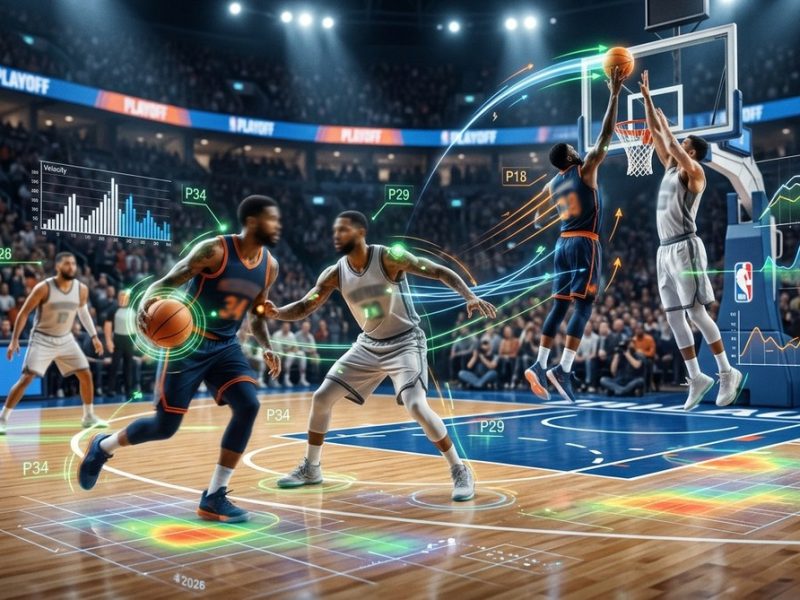
One of the most powerful tools is computer vision. Cameras record every play, and the AI breaks down each movement. It measures acceleration, reaction time, and decision-making speed. These metrics often reveal talent that a traditional scout might label as “raw” or “unpolished.” The AI sees potential where humans see inconsistency.
The Data Sources Powering AI Talent Prediction
AI does not work in a vacuum. It needs data, and lots of it. In 2026, the amount of data collected on young athletes is staggering. Here are the main sources that feed into AI models:
- Wearable sensors: Smart shirts, GPS trackers, and wristbands capture heart rate, distance covered, sprint frequency, and sleep quality.
- Video analysis: High-speed cameras and drone footage provide frame-by-frame breakdowns of technique and positioning.
- Biometric scans: Body composition, muscle activation, and joint flexibility are measured with precision.
- Game statistics: Every pass, shot, tackle, and turnover is logged and categorized.
- Psychological assessments: Reaction time tests and decision-making simulations measure mental sharpness.
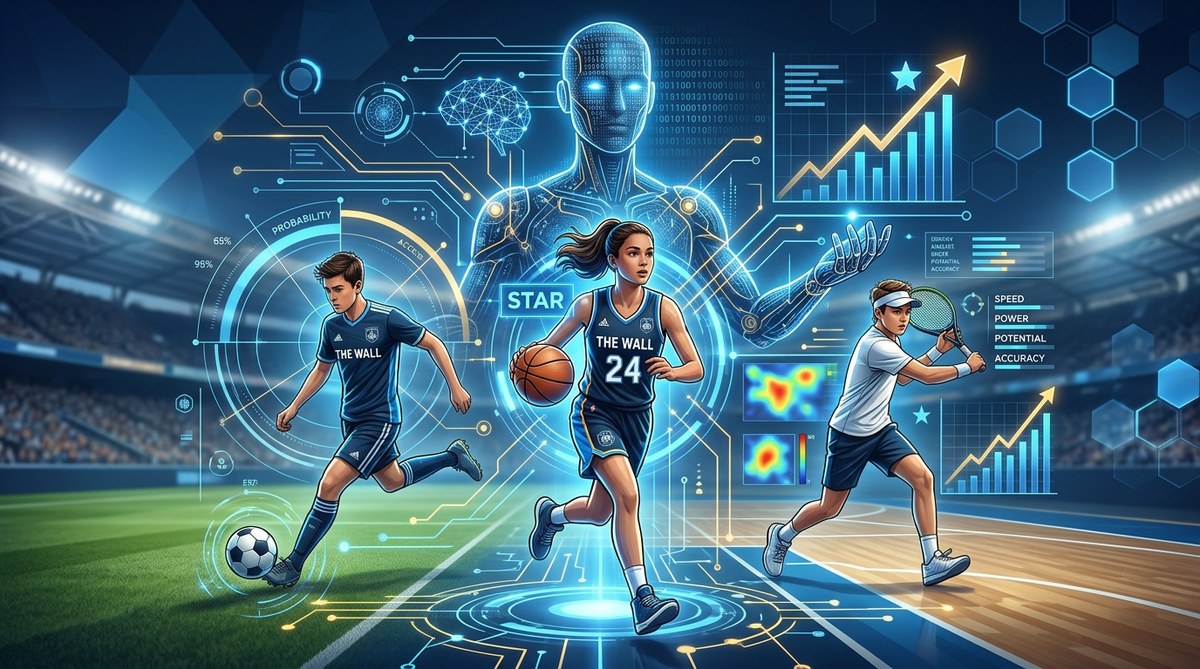
These data streams combine to create a detailed profile of each athlete. The AI then compares that profile against thousands of others to predict future performance. It is like having a crystal ball, but one that is powered by math instead of magic.
A Practical Process: How Teams Use AI to Scout
If you are a coach or a talent scout wondering how to apply this, the process is more straightforward than you might think. Here is a step-by-step look at how a professional team uses AI to find the next superstar:
- Collect baseline data: Equip athletes with wearables during practices and games. Record all video footage and upload it to a cloud platform.
- Train the model: Feed historical data from past successful athletes into the AI. The model learns what patterns predict success in your specific sport.
- Analyze current players: Run the new data through the trained model. The AI generates a list of prospects ranked by predicted potential.
- Validate with human scouts: Send the top candidates to experienced scouts for live observation. The AI flags players to watch, but humans confirm the intangibles.
- Monitor and adjust: Track the actual performance of selected athletes. Use that feedback to improve the AI model over time.
This process reduces the time spent on dead-end leads. It also uncovers hidden gems who might have been ignored by traditional methods.
Key Techniques and Common Mistakes
To get the most out of AI in talent scouting, you need to understand what works and what does not. The table below breaks down the most effective techniques and the pitfalls to avoid.
| Technique | How It Works | Common Mistake |
|---|---|---|
| Movement pattern analysis | AI tracks joint angles and stride efficiency to predict injury risk and speed potential | Relying only on raw speed without considering technique |
| Cognitive load testing | Simulates game pressure to measure decision-making speed | Ignoring emotional maturity and teamwork |
| Longitudinal tracking | Monitors athlete development over years to spot growth trends | Comparing athletes from different competition levels without adjusting for opponent quality |
| Biometric profiling | Uses body composition data to predict ideal position or sport | Overvaluing genetics while ignoring work ethic and coachability |
The best programs combine these techniques. They do not let the AI make final decisions alone. Instead, they use it as a powerful assistant that highlights players worth a closer look.
What the Experts Say
“AI will never replace the gut feeling of a great scout. But it will make that gut feeling more accurate. The teams that win in the next decade will be the ones that learn to trust the data without losing the human touch.”
- Dr. Elena Torres, Director of Sports Analytics at a top Division I university
This quote captures the balance. AI is a tool, not a replacement. The most successful organizations in 2026 are the ones that blend machine intelligence with human experience.
Why AI Is a Game Changer for Smaller Programs
Big professional teams have always had the resources to find talent. They can send scouts everywhere and afford the best technology. But AI is leveling the playing field. Smaller colleges, high schools, and even club teams can now access affordable scouting platforms.
A high school coach in rural Nebraska can upload game footage to an AI platform and get a detailed report on each player within hours. That same platform might flag a sophomore with unusual acceleration patterns, even if that player has not yet scored a lot of points. This kind of insight was once reserved for programs with six-figure budgets.
For fans and fantasy players, this shift is exciting. It means the next superstar could come from anywhere. The AI does not care about the size of the town or the reputation of the school. It only cares about the numbers.
The Human Side Still Matters
Let us be clear about one thing. AI predicting sports superstars is powerful, but it is not perfect. Machines struggle with things like leadership, resilience, and chemistry. A player might have perfect biometrics but struggle under the bright lights of a championship game. Another player might have average stats but an unstoppable will to improve.
That is why the best scouting departments use AI as a filter, not a final judge. They let the algorithm narrow the field, then send experienced scouts to watch the shortlisted players in person. They talk to coaches, teammates, and family members. They look for character.
If you are a young athlete reading this, do not think that AI reduces your chances. If anything, it increases them. The technology can see your potential even if you are not getting the spotlight right now. Keep working hard, keep playing smart, and the data will find you.
What This Means for the Future of Sports
The way we discover talent is changing. In five years, the idea of scouting without AI might seem as outdated as scouting without video replay. Teams that adapt will find superstars earlier and more consistently. Teams that ignore the trend will fall behind.
For fans, this means better competition. For coaches, it means smarter decisions. For young athletes, it means a fairer shot at being seen.
AI predicting sports superstars is not about replacing the magic of sports. It is about making sure that no talent goes unnoticed. And in 2026, that is a win for everyone.
Where to Go From Here
If you are curious about how these changes affect the sports you love, check out our guide on top 10 emerging sports trends you need to watch in 2026. It covers the broader shifts happening across the athletic world. You might also enjoy reading about how technology is revolutionizing athlete training and performance to see how AI fits into the bigger picture.
The future of talent discovery is here. It is data-driven, it is inclusive, and it is only getting smarter. Whether you are a coach, a scout, or just a fan who loves the game, now is the time to pay attention. The next superstar is out there, and AI is helping us find them.