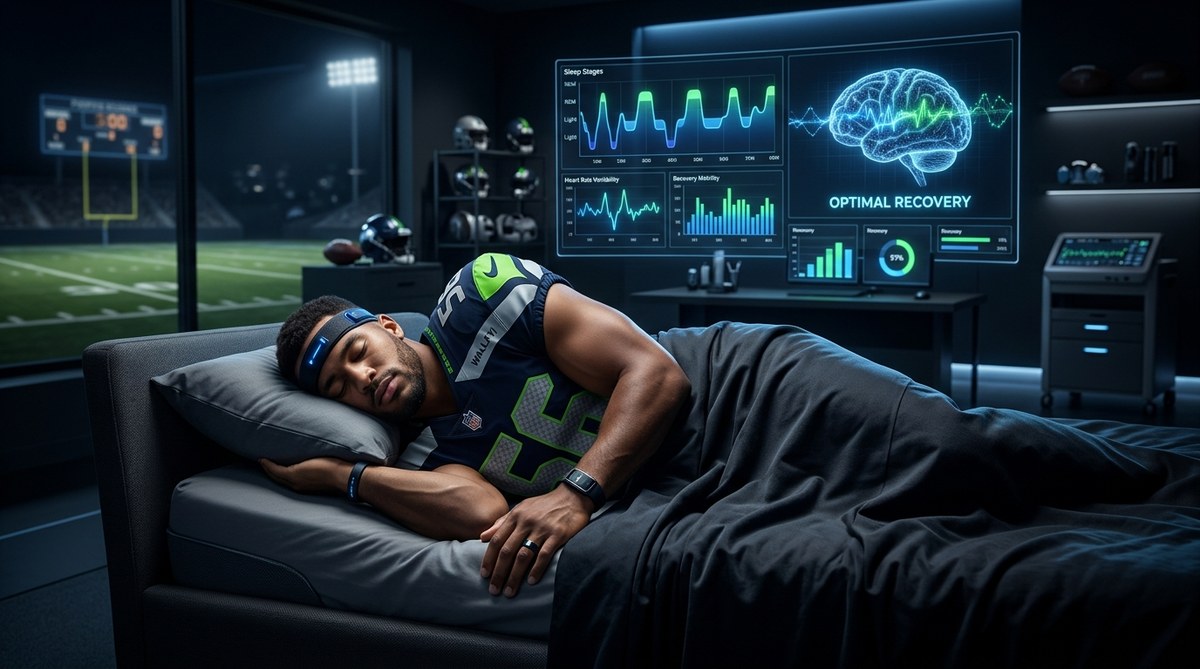
The Los Angeles Rams are not just winning because of their offensive line. They are winning because their players are sleeping in hyperbaric chambers, wearing rings that track their heart rate variability, and following personalized circadian schedules designed by PhDs. This is not a fringe experiment. Every franchise from the Patriots to the 49ers has invested heavily in sleep science recovery. The reason is simple: a well rested brain processes information 30% faster, and in a league where games are decided by milliseconds of reaction time, that margin is gold.
NFL teams in 2026 treat sleep as a non-negotiable pillar of performance, not a luxury. By tracking metrics like deep sleep duration, HRV, and cortisol levels, coaches can predict injury risk and optimize recovery. The same data-driven sleep tactics that elite players use can be adapted by weekend athletes to improve reaction time, muscle repair, and mental clarity. Ignoring sleep science is now a competitive liability.
Why the NFL Is Obsessed With Your Sleep Cycle
The shift started around 2020, when teams like the Kansas City Chiefs began hiring full time sleep consultants. By 2026, every team in the league has someone whose sole job is to monitor how many hours of slow wave sleep each player gets. The science is brutal but clear: sleep deprivation of just four hours reduces testosterone levels by the same amount as aging 15 years. For an athlete trying to build muscle and recover from a Sunday hit, that is catastrophic.
Professional football players take hits that are equivalent to a car crash. Their bodies need deep sleep to repair micro tears in muscle tissue and to clear out metabolic waste from the brain. Without adequate rest, inflammation stays high, reaction time slows, and the risk of soft tissue injury skyrockets. This is why teams now schedule flights around sleep cycles, dim the lights in training facilities at specific times, and even black out windows in hotel rooms on road games.
The Metrics That Matter Most
Coaches no longer ask, “Did you sleep well?” They ask, “What was your heart rate variability this morning?” HRV is a measure of the variation in time between each heartbeat. A high HRV signals a rested nervous system ready to perform. A low HRV signals fatigue and potential injury risk. Teams pair this with data from wearable rings and patches that track:
- Time spent in deep sleep (N3 stage)
- Respiratory rate during the night
- Skin temperature fluctuations
- Cortisol awakening response
When these numbers fall outside a player’s baseline, trainers pull them from practice. It is that direct. The days of “pushing through it” are over.
How Teams Build a Sleep Protocol
Implementing sleep science is not as simple as telling players to go to bed earlier. It requires a structured, repeatable process. Here is the standard protocol used by the majority of NFL strength and conditioning staffs in 2026.
-
Baseline measurement. Each player wears a medical grade sleep tracker for two weeks during the offseason. This establishes their personal optimal sleep window and identifies deficiencies like low REM duration.
-
Environmental control. Team facilities install circadian lighting systems that shift from blue enriched light in the morning to warm amber light after 7 PM. Players are given blackout curtains for home use and blue light blocking glasses for evening screen time.
-
Nutrition timing. Protein intake is timed to the final hour before sleep to maximize muscle protein synthesis overnight. Caffeine is cut off at least 10 hours before the scheduled bedtime, which is a stricter standard than most people follow.
-
Temperature manipulation. The sleeping environment is cooled to 65 degrees Fahrenheit. Lower temperatures are linked to longer durations of deep sleep. Teams provide cooling mattress pads for players who run hot.
-
Morning light exposure. Players are required to get 10 minutes of natural sunlight within 30 minutes of waking. This sets the circadian anchor for the entire day and improves the quality of the next night’s sleep.
-
Weekly review. Sleep data is reviewed every Monday morning alongside injury reports. A downward trend in sleep quality triggers a reduced training load for that week.
Common Sleep Mistakes Players Used to Make
Before the science became standard, players fell into predictable traps. Some of these mistakes are still common among weekend athletes.
| Mistake | Why It Hurts Performance | Better Approach |
|---|---|---|
| Sleeping in on game day | Shifts circadian rhythm and causes grogginess during warmups | Wake up at the same time every day, even on game day |
| Eating a heavy meal right before bed | Spikes core temperature and disrupts deep sleep | Finish the last meal 3 hours before lights out |
| Using a phone in bed | Blue light suppresses melatonin production | Use blue light blocking glasses or read a physical book |
| Drinking alcohol to fall asleep | Reduces REM sleep by up to 40% | Limit alcohol to zero on nights before training days |
| Sleeping in a warm room | Reduces time spent in restorative sleep stages | Keep the bedroom at 65 degrees Fahrenheit |
The Tech Stack Behind NFL Sleep Science Recovery
The gear used by NFL teams is not available at your local electronics store. It is medical grade and expensive, but the principles behind it are transferable. Teams use devices like the Oura Ring, the Whoop Band, and the Dreem headband to track brain wave activity. Some teams have invested in mattress systems that actively cool or heat different zones of the bed based on the sleeper’s real time temperature.
“We used to think recovery was about ice baths and protein shakes. Now we know that the most powerful recovery tool is an 8 hour sleep window with no interruptions. Everything else is secondary.” — Dr. Matthew Walker, sleep consultant for the San Francisco 49ers
The most interesting development in 2026 is the use of AI to predict sleep needs. A player who had a high load practice on Thursday will be assigned a longer sleep prescription on Thursday night. The algorithm learns each player’s recovery curve and adjusts recommendations daily. This kind of precision is why teams that adopt sleep science see a measurable drop in soft tissue injuries within a single season.
What Weekend Athletes Can Steal
You do not need a $5,000 mattress or a PhD consultant to benefit from NFL sleep science recovery. Here are the tactics that translate directly to a regular person’s life:
- Track your sleep with a wearable that measures HRV, not just steps
- Stop eating three hours before bed
- Keep your bedroom cool, dark, and quiet
- Wake up at the same time every day, even on weekends
- Get morning sunlight within 30 minutes of waking
- Avoid alcohol on nights before important workouts or games
These are the same habits that professional players follow. The only difference is the scale of the data collection.
Why This Matters for the 2026 Season
The competitive landscape of the NFL is more data driven than ever. Teams that ignore sleep science are leaving wins on the table. In the 2025 season, the teams with the highest average sleep quality scores also had the fewest player games missed due to injury. That correlation is not a coincidence. It is a direct result of treating recovery as a measurable, trainable variable.
For the fan watching at home, understanding this shift changes how you view the game. When a quarterback scrambles out of the pocket and makes a perfect throw under pressure, part of that success was determined the night before, in a dark room at 65 degrees, with a sleep tracker glowing on his nightstand.
How to Start Your Own Sleep Recovery Program
If you are a weekend athlete or a fantasy football player who wants to optimize your own performance, the path is straightforward. Start with one change that has the highest return on investment: consistent wake up time. Everything else builds from that anchor. Once you have that locked in for two weeks, add the temperature control. Then add the nutrition timing. Layer the habits one at a time.
For a deeper look at how technology is changing the way athletes train, check out our article on how technology is revolutionizing athlete training and performance. If you want to understand the broader shift toward recovery science, read about why recovery science is replacing grit in modern sports training. And for a complete list of techniques that pros use, our guide to 5 essential recovery techniques every athlete should know in 2026 is a great next step.
Sleep Is the New Steroid
The NFL has always been a league of inches. Now those inches are measured in hours of deep sleep. The teams that commit to the science are building healthier, more resilient rosters that perform better in the fourth quarter. The same principle applies to you. Your body repairs itself while you sleep. If you shortchange that process, you shortchange your performance.
Start tonight. Pick one habit from the list above and commit to it for the next 14 days. Track how you feel during your next workout or your next Sunday game. The difference will be noticeable. That is the power of treating sleep not as a passive break, but as an active recovery strategy.