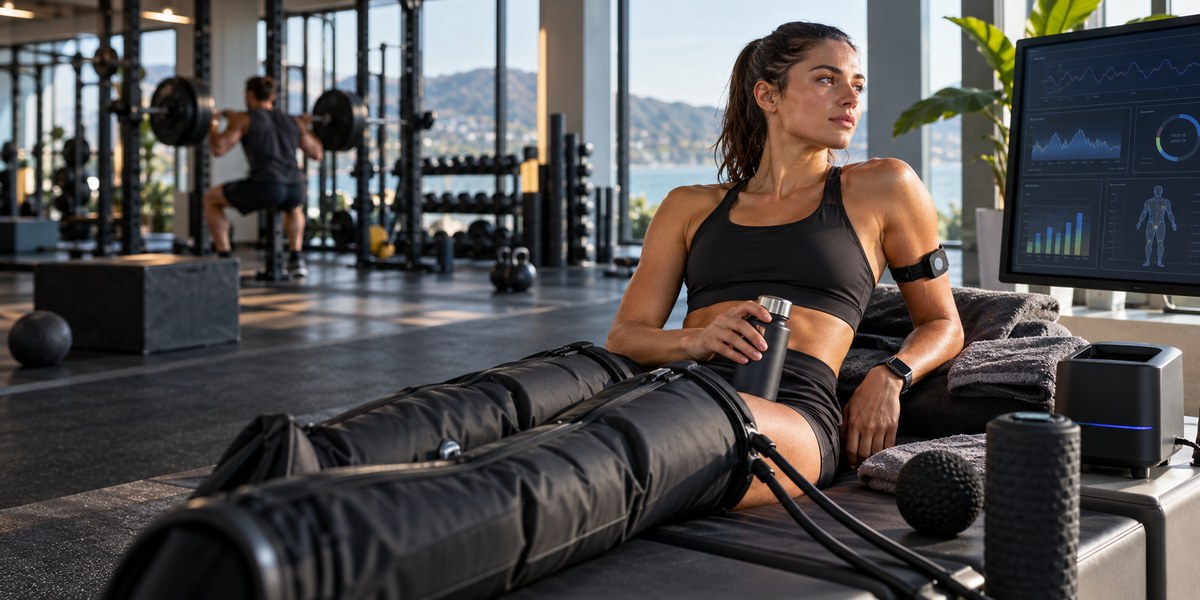
The old sports narrative told you to push through the pain. Grind until you drop. Champions, we were told, are the ones who want it more. That idea is fading fast. In 2026, the most successful athletes and the smartest coaches are trading the “no days off” mentality for something far more effective: recovery science. This shift is not about getting soft. It is about getting smart. The evidence is clear that strategic rest, data-driven recovery, and listening to your body’s biomarkers produce better results than sheer willpower ever could.
Recovery science is replacing grit as the foundation of elite sports training because it works. Data from wearables, heart rate variability, and sleep tracking shows that optimal performance comes from balancing stress with recovery. Pushing through pain without data leads to injury and burnout. The new model uses evidence to train smarter, not just harder.
Why the Grit Mindset Falls Short
Grit sounds good. It sells books and motivates highlight reels. But when you look at the physiology, pure grit has a dark side. Cortisol, the stress hormone, spikes when you constantly push your body without adequate rest. Chronic high cortisol leads to muscle breakdown, suppressed immune function, and poor sleep. You cannot outwork your biology.
Consider the story of a college distance runner who trained through shin splints because she wanted to prove her toughness. She ended up with a stress fracture that sidelined her for an entire season. Her grit did not make her stronger. It broke her down. The same pattern plays out in weight rooms, on basketball courts, and in CrossFit boxes across the country. Grit without data is just a fast track to injury.
The science of recovery acknowledges that the body adapts during rest, not during the workout itself. Training breaks down muscle fibers. Recovery rebuilds them stronger. If you skip the recovery, you stay broken down. That is the fundamental flaw in the old “grind culture.”
The Science of Recovery: How It Actually Works
Recovery science uses objective data to tell you when to push and when to pull back. This is where the phrase “recovery science sports training vs grit” gets its teeth. The approach relies on measurable metrics rather than subjective feelings of toughness.
Key Metrics That Guide Recovery
- Heart Rate Variability (HRV): A high HRV means your nervous system is balanced and ready for stress. A low HRV signals that you are not recovered. Top athletes check their HRV every morning before deciding how hard to train.
- Sleep Quality: Wearables now track deep sleep, REM, and sleep latency. If your sleep debt is high, your performance will suffer regardless of how much grit you have.
- Resting Heart Rate: A rising resting heart rate over several days is a red flag. It often indicates accumulated fatigue or the onset of illness.
- Muscle Soreness and Range of Motion: Subjective but useful. If your hamstrings feel like concrete, pushing a heavy squat session is not brave. It is foolish.
A Simple Recovery Protocol
- Morning Check: Measure HRV and resting heart rate before getting out of bed. Use a wearable or a dedicated app.
- Assess Readiness: If your HRV is below your personal baseline by 10% or more, consider a lighter training day or active recovery like walking or mobility work.
- Adjust Training Load: If numbers are green, proceed with your planned session. If they are yellow, reduce volume or intensity. If red, take a rest day.
- Post-Workout Refuel: Within 30 minutes, consume protein and carbohydrates to kickstart muscle repair. This is non-negotiable.
- Evening Wind-Down: Prioritize 7 to 9 hours of sleep. Limit blue light exposure one hour before bed.
Active Recovery vs. Passive Recovery
Not all recovery is the same. There are two main types, and each has a specific role.
| Recovery Type | Definition | Best For | Common Mistake |
|---|---|---|---|
| Active Recovery | Low-intensity movement like walking, yoga, or light cycling | Flushing metabolic waste, reducing soreness, maintaining blood flow | Doing too much. A 20 minute walk is active recovery. A 45 minute jog is another workout. |
| Passive Recovery | Complete rest with no planned physical activity | Allowing the central nervous system to reset, repairing deep tissue damage | Feeling guilty about it. Rest days are not lazy. They are productive. |
“The best athletes are not the ones who train the hardest. They are the ones who recover the fastest. Recovery is not the absence of training. It is the most important part of training.” – Dr. Emily Thornton, sports physiologist at the University of Colorado.
How to Build a Recovery-First Training Week
Shifting from a grit-based mindset to a recovery-based one requires a practical plan. Here is a framework used by many professional teams in 2026.
- Monday: Heavy strength session. High intensity.
- Tuesday: Active recovery. 30 minutes of zone 2 cardio. Mobility drills.
- Wednesday: Power or speed work. Plyometrics or sprint intervals.
- Thursday: Full rest day. No structured exercise. Focus on sleep and nutrition.
- Friday: Sport-specific skill work. Moderate intensity.
- Saturday: Endurance or high-volume session.
- Sunday: Active recovery. Long walk. Foam rolling. Stretching.
Notice the rest day is not an afterthought. It is scheduled. That is the difference between a recovery scientist and a grit devotee. The grit devotee fills every slot with work. The recovery scientist fills every slot with purpose, including the empty ones.
Why Wearable Tech Is Central to This Shift
You cannot manage what you do not measure. Wearable technology has made recovery science accessible to everyone, not just Olympic training centers. Devices like the Oura Ring, Whoop band, and Apple Watch now provide real-time feedback on readiness.
For example, a professional triathlete might wake up to a readiness score of 4 out of 10. The old approach would say “push through it.” The new approach says “today is a recovery day.” That single decision can prevent an injury that would have cost weeks of training. This is why the conversation around how technology is revolutionizing athlete training and performance is so relevant in 2026.
The Role of Sleep and Nutrition in Recovery
Recovery science goes beyond the gym. Sleep is the foundation. If you are not sleeping well, your body cannot repair itself. Nutrition is the fuel for that repair. Protein timing, hydration, and anti-inflammatory foods all play a role.
A common mistake athletes make is focusing only on post-workout nutrition while ignoring sleep. You can eat perfect meals all day, but if you sleep five hours a night, your recovery will suffer. The hidden dangers of overtraining often start with poor sleep habits that compound over weeks.
How Coaches Are Changing Their Language
The shift from grit to recovery is not just about data. It is about culture. Coaches who once yelled “dig deeper” are now saying “check your HRV.” They are learning that mental toughness is not about ignoring pain. It is about having the discipline to rest when the data says rest.
One NFL strength coach recently told his team: “I do not want you to be tough. I want you to be durable.” That one sentence captures the entire philosophy. Durability comes from smart training, proper recovery, and listening to your body. Toughness without durability leads to early retirement.
Practical Steps to Start Using Recovery Science Today
If you are an athlete or coach looking to make the switch, here is a checklist to get started.
- Buy a wearable that tracks HRV and sleep stages.
- Measure your baseline HRV for two weeks before making training decisions based on it.
- Schedule at least one full rest day per week. Treat it as sacred.
- Replace one “grind” workout per week with an active recovery session.
- Track your sleep consistency. Aim for the same bedtime and wake time every day.
- Learn the difference between discomfort (good) and pain (bad). Pain means stop.
For a deeper look at specific techniques, read about 5 essential recovery techniques every athlete should know in 2026. These methods are backed by research and used by pros.
The Future of Training Is Smarter, Not Harder
The debate of recovery science sports training vs grit is not really a debate anymore. The science has won. The athletes who prioritize recovery are the ones who stay healthy, perform consistently, and extend their careers. The ones who cling to grit as their only tool often burn out or break down.
This does not mean grit has no place. It does. You need grit to stick with a recovery protocol when it feels boring. You need grit to say no to an extra workout when your friends are pushing you. You need grit to wake up early for a mobility session instead of sleeping in. The difference is that grit is now the servant of strategy, not the master.
What the Best in the World Are Doing Differently
Look at the training programs of elite endurance athletes, NBA players, and UFC fighters. They all share a common thread. They periodize their training. They use deload weeks. They monitor their nervous system. They prioritize sleep. They do not train hard every day because they know the body cannot sustain that.
A UFC fighter does not spar full contact every day. They cycle intensity. A marathon runner does not race every weekend. They build in recovery blocks. These are not signs of weakness. They are signs of intelligence. The same principles apply to you, whether you are training for a local 5k or competing at a national level.
The Bottom Line on Recovery and Performance
You do not have to choose between being tough and being smart. The best path is to be both. Use the data to guide your effort. Use your discipline to follow the plan. When you understand that recovery is not a break from training but a critical part of it, your performance will change.
Start small. Pick one metric to track this week. Maybe it is your sleep. Maybe it is your morning HRV. Just start. The athletes who make this shift are the ones who will dominate in 2026 and beyond. The ones who refuse to change will keep getting injured and wondering why.
Recovery Science Is the New Competitive Advantage
The era of “no pain, no gain” is over. The new mantra is “train with purpose, recover with precision.” If you want to stay ahead of the curve, embrace the science. Your body will thank you, and your results will speak for themselves.
For more on how top performers are using these methods, check out how to build a personalized training plan that adapts to your body’s signals. It is the next step in making recovery science work for you.