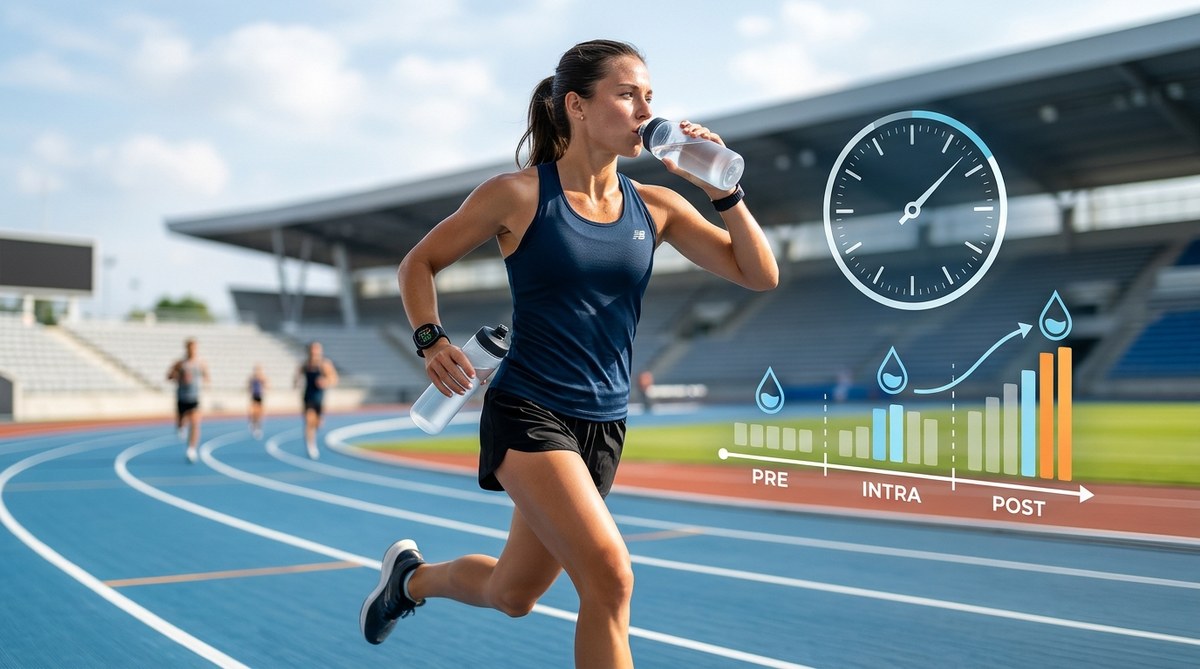
You already know you need to drink water. That is not the problem. The problem is that you are probably drinking it at the wrong times. A competitive athlete who downs a liter of water thirty minutes before a race is setting themselves up for sloshing discomfort and diluted electrolytes. Another athlete who sips strategically before, during, and after their workout unlocks better endurance, sharper focus, and faster recovery. This is the difference between drinking enough and drinking at the right time. Hydration timing for athletes is the missing link between a good performance and a personal record.
Total water intake matters, but the timing of that intake determines whether your body can actually use it. Drinking too much too early causes bloating and electrolyte imbalance. Drinking too late leads to cramping and fatigue. The sweet spot is a pre load two to three hours before exercise, small sips during activity, and a measured rehydration window after your final rep.
The Science Behind the Clock
Your body does not process water instantly. It takes time for fluids to move from your stomach into your bloodstream and then into your working muscles. If you chug a bottle right before a sprint, most of that water will sit in your gut. Your body will try to shunt blood away from your muscles to absorb it, which hurts performance.
Research from sports medicine journals in 2025 and 2026 confirms that plasma volume expansion happens best when you hydrate steadily over a two to three hour window before exercise. This allows your kidneys to regulate fluid levels and your cells to become fully saturated. You are not just filling a tank. You are preparing your body to sweat without crashing.
What Happens When You Get the Timing Wrong
Many athletes fall into common traps. Here are the mistakes that sabotage performance:
- The pre race flood: Drinking a huge volume of plain water 30 minutes before a workout dilutes sodium levels. This can trigger hyponatremia, a dangerous drop in blood sodium.
- The dry start: Starting exercise already dehydrated by even 2 percent reduces endurance and impairs decision making. Your brain is about 75 percent water. It notices the deficit first.
- The post workout chug: Waiting until after a session to rehydrate misses the window where your body absorbs fluids most efficiently. Your muscles are primed for recovery immediately after exercise, not an hour later.
- Ignoring electrolytes: Plain water without sodium or potassium during long sessions leads to dilution and cramping. You need a balance, not just volume.
A Three Phase Strategy for 2026 Athletes
You can fix your hydration timing with a simple numbered process. This works whether you are training for a marathon, grinding through a CrossFit WOD, or swimming laps for a triathlon.
-
Pre load two to three hours before: Drink 16 to 20 ounces of water with a pinch of salt or an electrolyte tab. This gives your kidneys time to process the fluid and your cells time to absorb it. You should be urinating pale yellow or clear before you start.
-
Sip during exercise, do not gulp: For sessions longer than 60 minutes, take 4 to 8 ounces every 15 to 20 minutes. If you are sweating heavily, use a sports drink with around 300 to 500 milligrams of sodium per liter. For shorter sessions, plain water is fine.
-
Rehydrate with purpose after: Within 30 minutes of finishing, drink 20 to 24 ounces for every pound of body weight lost during exercise. Weigh yourself before and after training to get an accurate number. Add a meal or snack with sodium and potassium to lock in the recovery.
When to Prioritize Electrolytes Over Plain Water
A lot of athletes assume water is always the answer. That is not true. The table below shows when to switch from water to electrolyte enhanced drinks.
| Scenario | Fluid Choice | Why It Matters |
|---|---|---|
| Session under 60 minutes, low sweat | Plain water | Your body has enough stored electrolytes to cover this. |
| Session over 60 minutes, moderate to heavy sweat | Electrolyte drink (300 500 mg sodium per liter) | You lose sodium through sweat. Replacing it prevents cramping and maintains nerve function. |
| Hot or humid conditions (above 85 degrees) | Electrolyte drink regardless of duration | Heat accelerates sweat loss. Plain water alone dilutes your blood sodium faster. |
| Back to back training sessions (two a days) | Electrolyte drink with carbohydrates | You need to replenish glycogen and electrolytes simultaneously. |
| Early morning fasted training | Water first, then electrolytes mid session | Your overnight fast depletes fluids. Start with water, then add electrolytes as you sweat. |
A Practical Example for Race Day
Let us say you are running a half marathon on a Saturday morning in May. Your race starts at 7:00 AM. Here is how you time your hydration:
- 4:30 AM: Wake up and drink 16 ounces of water with a small electrolyte tablet.
- 6:00 AM: Drink another 8 ounces of water. Stop drinking by 6:30 AM to give your stomach time to settle.
- During the race: Take 3 to 4 ounces of sports drink at every water station (roughly every 20 minutes). Do not stop and chug. Sip while you keep moving.
- Post race: Within 15 minutes of crossing the finish line, drink 20 ounces of a recovery drink or chocolate milk. Eat a banana or a bagel with peanut butter.
This structure prevents the slosh, keeps your sodium levels stable, and sets you up for a smoother recovery than the person who chugs a full bottle at the start line.
The Role of Technology in Hydration Timing
Wearable tech has changed how athletes track fluid loss. Smart water bottles now log your sips and remind you when to drink. Sweat patches analyze your sweat composition and tell you exactly how much sodium you are losing. You can use these tools to personalize your timing even further.
For example, if your sweat patch shows you are a heavy sodium loser, you need more electrolytes in your pre load and during your session. If you are a light sweater, you can stick closer to plain water. This kind of personalization is becoming standard for serious athletes in 2026. It takes the guesswork out of hydration timing for athletes who want every advantage.
“The biggest mistake I see in elite level athletes is treating hydration like a chore instead of a strategy. They drink when they remember, not when their body needs it. Timing transforms water from a basic need into a performance tool.” Dr. Sarah Lindgren, sports physiologist and consultant for US Olympic training centers.
How to Tell If Your Timing Is Working
You do not need a lab test to know if your hydration timing is on track. Use these signs:
- Your urine color is pale yellow before and after exercise. Dark yellow or brown means you started dehydrated.
- You do not feel the urge to stop and drink large amounts during your workout. You sip naturally.
- Your performance does not drop off sharply in the last 15 minutes of your session. Fatigue should come from muscle exhaustion, not dehydration.
- You do not wake up with a headache or feel groggy after hard training days. That is often a sign you missed the post workout window.
If you check these boxes, your timing is working. If not, adjust your pre load or your during exercise sipping schedule.
Tying Hydration Timing to Your Overall Training Plan
Hydration timing does not exist in a vacuum. It connects directly to your nutrition, sleep, and recovery. If you are interested in a broader view of how these pieces fit together, check out our article on how nutrition science is redefining peak performance for 2026 athletes. The same principle applies: what you consume and when you consume it determines how your body responds.
Also, your recovery routine matters just as much as your hydration strategy. We cover this in detail in 5 essential recovery techniques every athlete should know in 2026. Proper hydration timing supports every one of those techniques by ensuring your muscles have the fluid and electrolytes they need to repair.
Adjusting for Different Types of Athletes
Hydration timing is not one size fits all. A marathon runner has different needs than a CrossFit athlete or a triathlete. Here is how to adjust:
- Endurance athletes (marathon, triathlon): Focus heavily on the pre load. You have time before the event to get fully hydrated. During the event, sip consistently. Do not wait until you feel thirsty. Thirst is a lagging indicator.
- High intensity athletes (CrossFit, HIIT, sprinting): Your sessions are shorter but more intense. You lose less total fluid but more sodium per minute. Use an electrolyte drink for sessions over 45 minutes. Pre load with water and a small amount of salt.
- Team sport athletes (soccer, basketball, football): You have breaks built into your schedule. Use those breaks to take small sips. Do not chug during halftime. You will feel sluggish in the second half. Pre load before practice and games.
The Mistakes That Still Happen in 2026
Even with all the information available, athletes still make these errors:
- Drinking coffee or energy drinks as a substitute for water before training. Caffeine is a mild diuretic. It does not count toward your hydration.
- Relying on thirst alone. By the time you feel thirsty, you are already behind. Set a timer on your phone or watch if you need a reminder.
- Using the same hydration plan for winter and summer. Cold weather hides sweat loss. You still need to hydrate, just with less volume. Hot weather demands more electrolytes.
- Ignoring the post workout window. Drinking after your session is not optional. It is the most critical part of the timing cycle.
Small Adjustments, Big Results
You do not need to overhaul your entire routine. Pick one change this week. If you currently chug water before training, try spreading it out over two hours. If you never drink during exercise, start with a few sips every 15 minutes. If you skip post workout rehydration, add a measured drink within 30 minutes of finishing.
These small shifts in hydration timing for athletes compound over weeks and months. You will notice fewer cramps, steadier energy, and faster recovery. The water you are already drinking will start working harder for you.
Own Your Hydration Schedule
The clock is your best training partner. Stop treating hydration as something you do when you remember. Treat it as a timed protocol that starts hours before your warmup and ends after your cool down. Your body will respond with better performance, fewer injuries, and a stronger finish. Start tomorrow morning with your pre load. Your next workout will feel different.