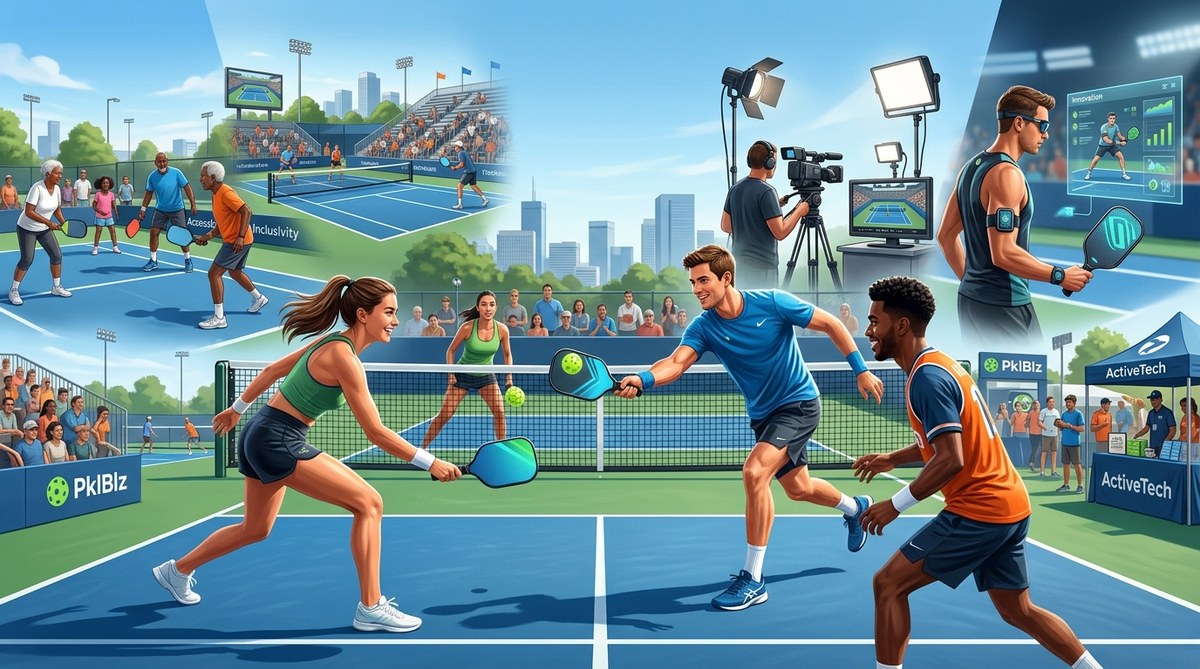
Pickleball has already become the fastest growing sport in America. You see new courts popping up in parks, gyms, and even converted tennis facilities. But here is the part most people miss: pickleball is not just a fun pastime for retirees or a weekend hobby. It is quietly rewriting the rules of what competitive sports can look like in 2026 and beyond.
Pickleball is more than a trend. Its low barrier to entry, hybrid social competitive format, and data friendly gameplay are influencing how new sports are designed and marketed. From senior fitness to pro esports, the future of pickleball sports points toward a model that values accessibility, community, and smart technology over pure athletic elitism.
How Pickleball Is Redefining Entry Points for New Athletes
Traditional competitive sports like basketball, soccer, or tennis often require years of training before a player feels competent. Pickleball flips that model. A beginner can learn the basic rules in ten minutes and play a real rally within an hour. That changes the entire pipeline of sports participation.
The future of pickleball sports depends on this low friction onboarding. The sport removes the intimidation factor. A 45 year old office worker who has not touched a racket since high school can step onto a court and have fun immediately. That is rare in competitive athletics.
Here is what that looks like in practice:
- Pick up a paddle at a local recreation center for under forty dollars.
- Watch a five minute video on the basic rules.
- Join a “drop in” game at a public court with strangers who welcome beginners.
- Play your first game within fifteen minutes of arriving.
- Decide if you want to improve by watching free tutorials online.
This model is already influencing how other sports recruit new players. Tennis associations are studying pickleball’s social format to redesign their own beginner programs. Some golf clubs are adding smaller, pickleball style putting greens to attract younger members.
The Hybrid Social Competitive Model
Pickleball sits in a unique spot between a casual social activity and a serious competitive sport. That hybrid identity is one of the most important factors shaping the future of pickleball sports.
Most traditional sports force a choice. You either play for fun with no structure, or you join a league with strict rules and rankings. Pickleball allows both to coexist on the same court. You can play a friendly doubles match with your neighbor at 10 AM and then watch a high stakes tournament match at 2 PM.
This flexibility creates a wider funnel for participation. The sport does not lose people who would otherwise quit when competition gets too serious. It also does not bore people who want to push their limits.
- Casual players can enjoy the social aspect without pressure.
- Competitive players can find leagues, rankings, and prize money.
- Retired athletes can stay active without risking injury.
- Young players can develop skills in a low pressure environment.
The model is so effective that other sports are borrowing it. Some basketball associations now offer “half court” recreational leagues that mimic pickleball’s relaxed pacing. The trend is spreading.
Data and Technology Are Changing How Players Train
One of the most surprising developments in the future of pickleball sports is how quickly technology has embedded itself into the game. Smart paddles with sensors that track swing speed, ball contact, and shot placement are becoming common at the intermediate level.
Wearable tech is also playing a role. Players use wrist bands to monitor heart rate variability and recovery between rallies. This data helps them adjust their training load in real time.
| Training Area | Traditional Approach | Pickleball Tech Enhanced Approach |
|---|---|---|
| Shot accuracy | Coach observation | Sensor data with instant feedback |
| Endurance | Timed running drills | Court movement heat maps |
| Recovery | Rest when tired | HRV guided rest periods |
| Skill progression | Subjective feel | Objective stats over time |
This data driven approach is not limited to pros. Weekend warriors are using apps to track their win loss ratios, shot placement, and even the types of rallies they lose most often. For a deeper look at how these tools are changing sports, check out how technology is revolutionizing athlete training and performance.
“Pickleball is a data goldmine because the court is small and the rally count is high. You get more meaningful stats in one hour than you would in three hours of tennis.” — Coach Maria Santos, USA Pickleball certified instructor
This accessibility to data is creating a new type of athlete. One who understands their performance on a granular level without needing a personal coach or a high end training facility.
Pickleball Is Changing the Demographics of Competitive Sports
For decades, competitive sports have been dominated by young athletes. The window for peak performance is narrow. Pickleball is breaking that mold.
The future of pickleball sports includes a strong and growing segment of players over 50. National tournaments now feature divisions for players in their 60s and 70s. Some professional pickleball players are in their 40s and 50s, an age where most athletes in other sports have long retired.
This demographic shift matters for the entire sports industry. Equipment manufacturers are designing paddles and shoes specifically for older bodies. Apparel brands are making lines that prioritize comfort and mobility over flashy aesthetics. Even court design is changing, with more shaded seating and accessible restrooms near the playing area.
The ripple effect is visible across other sports. Top 10 emerging sports trends you need to watch in 2026 includes several that follow pickleball’s lead in age inclusivity. The idea that competitive sports are only for the young is fading.
The Rise of Pickleball as a Spectator Sport and Esports Hybrid
Here is where the future of pickleball sports gets really interesting. Pickleball is becoming a legitimate spectator sport. Major tournaments are streaming on platforms like YouTube and Twitch. The professional tour now has title sponsors and prize pools that attract serious athletes.
But the real surprise is the crossover with esports. Virtual pickleball games are appearing on VR platforms and mobile apps. These digital versions allow players to compete against each other from different states. The skill transfer between real and virtual play is surprisingly high.
This hybrid model is creating a new category of athlete. Players who cannot afford travel to tournaments can still compete in virtual leagues. They can build rankings, earn recognition, and even qualify for real world events through their digital performance.
The format is attracting a younger audience that traditional racket sports have struggled to reach. If you are curious about how this trend fits into the broader landscape, read about the rise of virtual sports and esports.
How to Get Involved in the Future of Pickleball Sports
You do not need to be a pro to be part of this shift. The future of pickleball sports is being built by everyday players who show up, bring friends, and share their experiences online.
Here are a few practical steps to get started:
- Find a local court using an app like Pickleball Finder or your city’s parks website.
- Buy a beginner paddle set. Do not overspend. A forty dollar paddle is fine.
- Watch one or two tutorial videos to learn basic footwork and the volley.
- Join a beginner friendly Facebook group in your area.
- Play at least three times before deciding if you want to invest in better gear.
If you already play, consider tracking your performance with a simple app. Even basic data like win rate and rally length can help you improve. For more on how to structure your training, check out how to build a personalized training plan that adapts to your body’s signals.
What This Means for the Next Decade of Athletics
Pickleball is not replacing any sport. It is showing the sports world a new way forward. One where accessibility matters as much as athleticism. Where community and competition can coexist. Where data helps everyone improve, not just the elite.
The future of pickleball sports is a blueprint. It proves that a sport can grow fast without losing its soul. It can welcome beginners and still challenge pros. It can use technology without becoming cold or impersonal.
If you are a fitness enthusiast, a sports industry professional, or just someone who loves watching how culture evolves, keep an eye on pickleball. It is not just a game. It is a signal of where competitive sports are heading.
So grab a paddle, find a court, and join the movement. The sport is still young. The people playing today are the ones shaping what it becomes tomorrow.