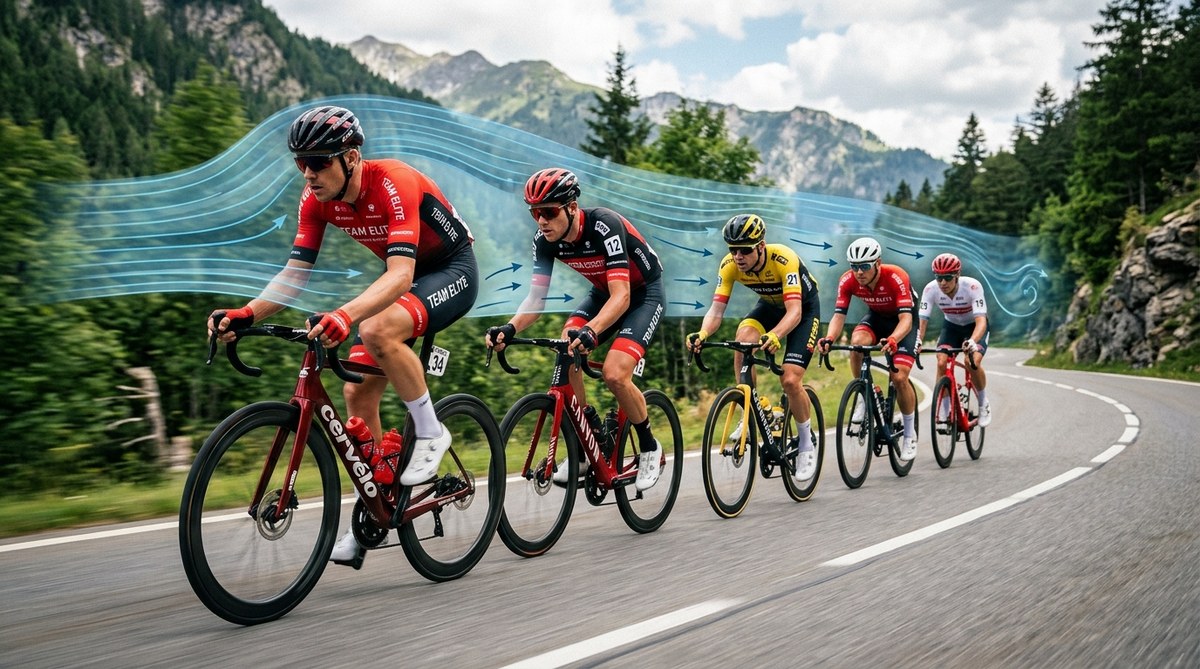
You line up for a group ride or a race, and within minutes you feel it. That slight push. The way the air seems to part just a little easier when you tuck in behind another rider. That feeling is not just luck. It is the result of one of the most powerful tools in competitive cycling: drafting. Elite cyclists have turned this aerodynamic shield into a science. They do not just follow wheels. They use specific strategies to gain a measurable speed advantage. Research shows that a well-executed drafting position can reduce your aerodynamic drag by up to 30%. That translates directly into a 5% speed boost without any extra effort from your legs. For a triathlete pushing for a personal best or a road racer trying to hold the wheel on a climb, that boost can be the difference between finishing strong and getting dropped.
Drafting is not just about riding close. It is a calculated aerodynamic tool that saves energy and increases speed. By understanding the pressure wake, managing your follow distance, and using team rotation tactics like pacelines and echelons, you can achieve a consistent 5% speed boost. This article breaks down the fluid dynamics, practical applications, and common mistakes so you can ride faster with less effort.
The Science Behind the 5% Speed Boost
When you ride, your body pushes against a wall of air. That resistance, known as aerodynamic drag, is the single biggest force slowing you down at speeds above 12 mph. The harder you push, the more energy you burn just fighting the wind.
The rider in front creates a low-pressure wake behind them. Think of it as a moving pocket of thinner air. When you position yourself inside that pocket, you face less resistance. Your lungs and legs do not have to work as hard to maintain the same speed. This is the core of the cycling drafting speed boost.
Studies using wind tunnels and computational fluid dynamics show that a cyclist riding 0.5 meters behind another rider can reduce their drag by roughly 30%. That saving directly increases your speed for the same power output. If you normally ride at 20 mph on flat ground, a 30% drag reduction can push you closer to 21 mph. That is your 5% speed boost.
But the effect does not last forever. The further you drop back, the more the wake dissipates. At 1 meter, the savings drop to about 15%. At 2 meters, you are mostly on your own. The key is to stay close enough to catch the draft but far enough to react safely.
How to Apply Drafting for a Measurable Speed Gain
You can turn this science into a repeatable process. Here is a numbered list of steps to practice on your next group ride or during a training session with a friend.
-
Find the sweet spot. Start by riding directly behind another rider. Aim for a gap of about one bike length between your front wheel and their rear wheel. This is roughly 0.5 to 1 meter. You will feel the air resistance drop noticeably. If you feel too much wind on your chest, you are too far back.
-
Match their cadence and rhythm. Do not just stare at their wheel. Watch their shoulders and hips. These move before the bike does. If you anticipate their pedal stroke, you can react smoothly to any changes in speed. Jerky movements waste energy and break the draft.
-
Use a consistent pedal stroke. When you are in the draft, your power output can drop by 10 to 20% to maintain the same speed. Do not try to hammer. Relax your upper body and focus on a smooth, circular pedal motion. This keeps you stable and saves energy for later.
-
Practice with a partner on a flat road. Find a quiet stretch and take turns leading for one minute. The rider behind should try to stay within the one-bike-length zone. Use a power meter or a heart rate monitor to see the difference. You will see your wattage drop while your speed stays the same.
-
Communicate before you move. In a group setting, always signal your intentions. A simple hand signal or a verbal call like “dropping back” keeps everyone safe and prevents sudden gaps that ruin the draft.
Common Drafting Mistakes and How to Fix Them
Even experienced riders make errors that cost them the cycling drafting speed boost. Here is a table that shows the most common mistakes and the correct technique.
| Mistake | What It Costs You | Correct Technique |
|---|---|---|
| Riding too far back (2 meters or more) | You lose 80% of the draft benefit. You are fighting the wind alone. | Close the gap to one bike length or less. You should feel a clear reduction in wind noise. |
| Overlapping wheels | Extremely dangerous. A slight move can cause a crash. You also create turbulence that slows both riders. | Keep your front wheel directly behind their rear wheel. Never let your wheel cross theirs. |
| Staring at the wheel in front | You react late to changes in speed. This leads to braking and surging, which wastes energy. | Look through the rider ahead. Watch their shoulders and the road beyond. Peripheral vision handles the wheel. |
| Sitting upright in the draft | Your body acts like a sail. You catch crosswinds and create drag for the rider behind. | Keep your elbows bent and your back flat. Tuck your head down slightly. A lower profile cuts more air. |
Team Rotation Tactics That Maximize the Draft
Professional teams do not just follow one rider. They rotate to share the workload and maintain a high average speed. Two main formations are used in road racing and competitive group rides.
The Paceline
In a standard paceline, riders line up single file. The lead rider pulls for a set time (often 30 seconds to 2 minutes) and then swings off to the side. They drift to the back of the line while the next rider takes the front. This rotation keeps the group moving fast because only one rider fights the full wind at any moment. The rest of the group enjoys the draft.
The Echelon
When a crosswind hits, a single file line does not work. The lead rider creates a wind shadow that angles sideways. The group forms an echelon, which is a staggered line that extends across the road. Riders position themselves slightly behind and to the downwind side of the rider in front. This blocks the wind for everyone in the formation. Echelons require practice and good communication, but they are essential for maintaining speed in windy conditions.
“The most important thing in a breakaway is not how strong you are. It is how well you read the wind and use the riders around you. A good drafter can make a mediocre rider look fast.” — A respected U.S. cycling coach who has worked with WorldTour teams.
Equipment and Positioning Tweaks for Better Drafting
Your bike setup and body position also affect how well you can use the draft. Here are a few adjustments that elite cyclists use.
- Lower your stem. A slightly lower handlebar position flattens your back. This reduces your frontal area and helps you fit more snugly into the wake of the rider ahead.
- Use a smaller front chainring. When you are in the draft, your cadence often increases. A smaller chainring lets you spin smoothly without mashing the pedals. This keeps your body stable.
- Wear a skinsuit or tight jersey. Loose clothing flutters in the wind and creates drag. A tight kit helps you slip through the air more cleanly, especially when you are in the draft.
- Check your wheel alignment. Make sure your front wheel is perfectly straight. Even a slight wobble creates turbulence that can slow you down and disrupt the rider behind you.
For more on how technology is changing the way athletes train and perform, check out our article on how technology is revolutionizing athlete training and performance.
A Practical Session to Test Your Drafting Efficiency
You do not need a wind tunnel to measure your progress. Here is a simple on-road test you can do with a friend.
- Find a flat, straight road with little traffic.
- Both riders should have a power meter or a heart rate monitor.
- Ride side by side at a steady pace (say, 18 mph) for two minutes. Record your average power.
- Then, one rider drops behind the other at a distance of one bike length. Maintain the exact same speed for two minutes. Record your average power again.
- Swap positions and repeat.
The difference in power is your personal drafting savings. Many riders see a 15 to 25% drop in power for the same speed. That is your 5% speed boost in action. If you practice this weekly, you will learn to find the optimal distance by feel.
Why Recovery and Consistency Matter for Drafting
Drafting saves energy, but it also requires focus. A rider who is tired or dehydrated will struggle to hold a steady line. That is why recovery is a big part of using drafting effectively. If you are fatigued, your bike movements become erratic. You surge, brake, and drift out of the draft. This wastes the energy you were trying to save.
Make sure you are well rested and hydrated before a hard group ride or race. Use the draft to recover, but do not rely on it to fix poor fitness. The best drafters are also the best at managing their own effort. They know when to push and when to sit in.
For a deeper look at how athletes are using science to recover faster, read our piece on 5 essential recovery techniques every athlete should know in 2026.
Common Questions About Drafting for Speed
How close is too close?
For most riders, a gap of 0.5 to 1 meter is ideal. Any closer than 0.3 meters and you risk overlapping wheels. Any further than 1.5 meters and you lose most of the benefit.
Does drafting work on climbs?
Yes, but the effect is smaller. At slower speeds (under 12 mph), aerodynamic drag is less of a factor. The drafting benefit on a steep climb might be only 2 to 3%. On a false flat or a moderate gradient, the savings are still meaningful.
Can I draft a car or a motorcycle?
Technically, yes, but it is extremely dangerous and illegal on public roads. The wake from a large vehicle is unpredictable, and the speed difference is too great. Stick to drafting other cyclists.
What about drafting in a triathlon?
Many triathlon events have strict rules about drafting. Some races allow it only during certain segments. Others ban it entirely. Always check the rules of your specific event. If drafting is allowed, use it to save energy for the run leg.
Putting the 5% Speed Boost to Work
You now have the science, the tactics, and the practical steps to use drafting for a real speed gain. The next time you ride, focus on one thing: holding a steady line at the right distance. Do not try to do everything at once. Start with the paceline technique on a flat road. Pay attention to how your body feels when the draft kicks in. Your legs will tell you when you have found the sweet spot.
Drafting is not a secret. It is a skill. And like any skill, it improves with practice. The riders who win races and set personal records are the ones who master the small details. They do not just ride hard. They ride smart.
If you are curious about other emerging trends in the sports world, take a look at our list of top 10 emerging sports trends you need to watch in 2026.
Your Next Step: Train the Draft
Find a training partner this week. Go to a flat stretch of road. Do the power test described above. See exactly how much energy you save. Then, work on holding a steady gap for longer periods. Within a few sessions, you will feel more confident and your average speed will climb. That is the real reward. It is not just about going faster. It is about going faster with less effort, so you have more left for the moments that matter.