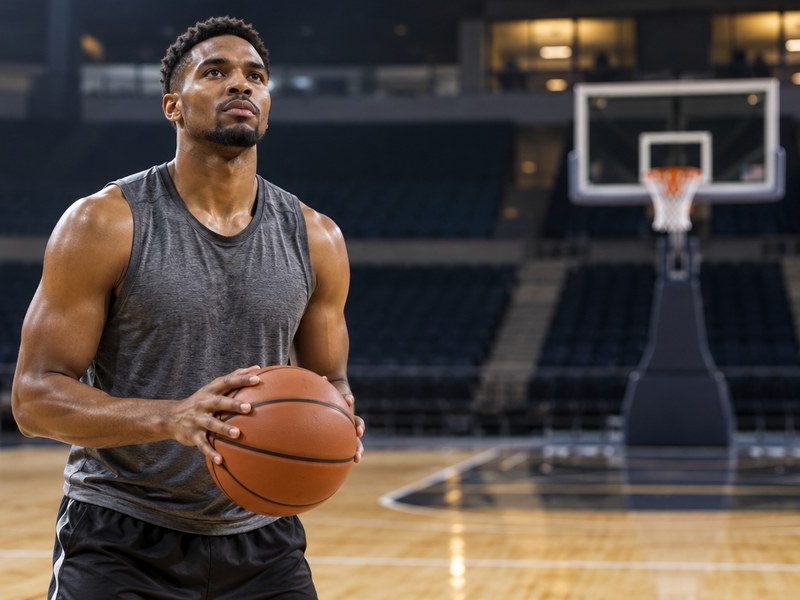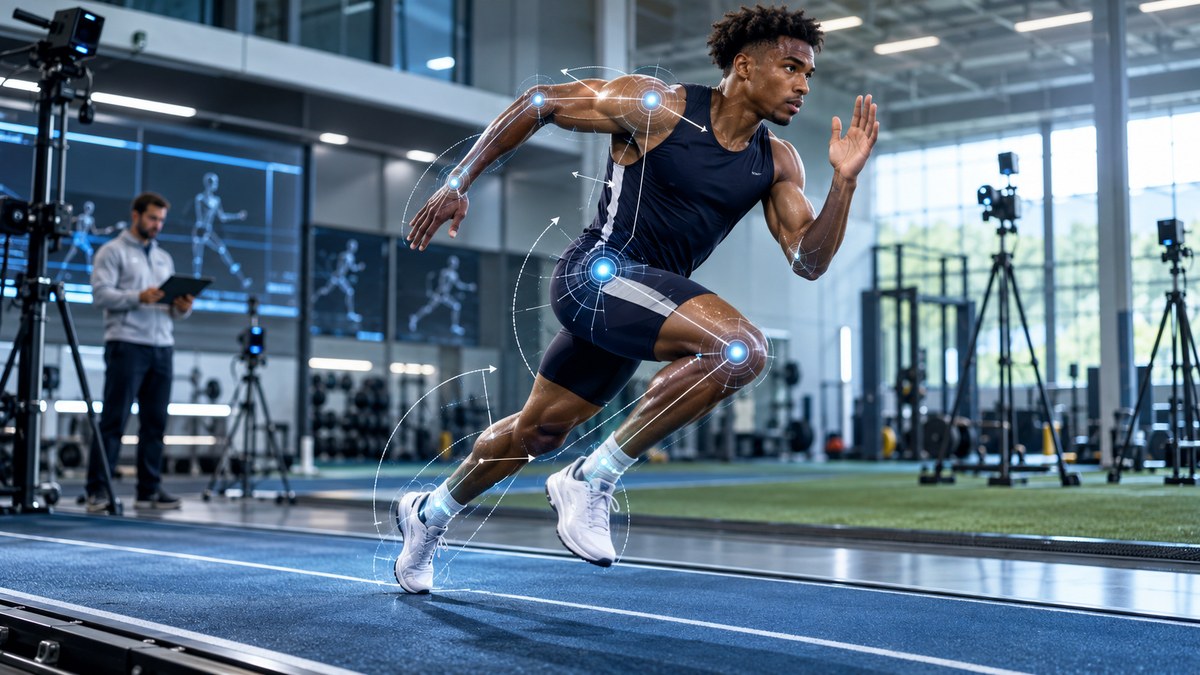
The gap between college athletics and professional sports has never been smaller. In 2026, that gap is closing even faster thanks to one discipline: biomechanics. For decades, pro teams had exclusive access to motion-capture labs, force plates, and teams of analysts. That monopoly is over. Universities across the United States are now equipping their athletes with the same tools that NFL and NBA stars use. The result is a new breed of college athlete who moves with professional efficiency, recovers faster, and stays healthier through a full season.
Biomechanics gives college athletes a professional advantage by using data to refine movement, prevent injuries, and personalize training. Coaches who adopt motion analysis, wearable sensors, and force plate feedback can close the performance gap between their team and pro-level competition, all while keeping athletes safer.
What Biomechanics Actually Measures
Biomechanics is the study of how the body moves. In sports, it breaks down every jump, sprint, swing, and throw into measurable variables. Think of it as a slow-motion replay that also shows you the hidden forces at work.
The two main branches are kinetics and kinematics. Kinetics looks at forces: how much ground reaction force a runner produces, how much torque a pitcher generates through their hips. Kinematics tracks motion: joint angles, limb speeds, and the path of a basketball during a free throw. Together, they paint a complete picture of athletic performance.
For a college sprinter, biomechanics might reveal that their left foot lands too far in front of their center of mass. That small flaw costs them milliseconds every stride. Over 100 meters, those milliseconds add up to a loss that separates a podium finish from a middle-of-the-pack result.
Why College Programs Are Adopting Biomechanics Now
The technology has become more affordable and portable. A full motion-capture system that cost a quarter million dollars a decade ago can now be replaced by a set of wearable sensors and two high-speed cameras for a fraction of the cost. This shift means that schools outside the top-tier athletic conferences can also give their athletes a professional advantage.
Coaches are also seeing the financial incentive. A single season-ending injury to a star player can cost a program hundreds of thousands of dollars in lost scholarship value, medical care, and recruiting setbacks. Biomechanics helps reduce that risk.
Here is a quick look at the most common methods used in college programs today:
| Technique | What It Measures | Common Mistake It Catches |
|---|---|---|
| Force plate analysis | Ground reaction force, balance | Landing with too much vertical force instead of absorbing through the hips |
| Wearable IMU sensors | Joint angles, acceleration | Overstriding during a sprint, which increases braking force |
| High-speed video capture | Limb coordination, timing | A pitcher opening their front hip too early, losing velocity |
| Electromyography (EMG) | Muscle activation patterns | Over-relying on quadriceps while glutes remain underactive |
Each of these tools provides data that a coach can act on immediately. You do not need a PhD to interpret the results. You just need to know what to look for.
A Practical Process for Using Biomechanics in Training
If you are a coach or athlete looking to start, follow this numbered process. It keeps things simple and avoids information overload.
-
Establish a baseline. Record the athlete performing their sport-specific movement. A sprinter runs 40 yards. A pitcher throws from a mound. A basketball player does a vertical jump. Capture video and, if possible, force plate data.
-
Identify one asymmetry or inefficiency. Do not try to fix everything at once. Look for the biggest difference between the left and right side, or the most obvious deviation from an efficient pattern. For most athletes, this is a hip or shoulder imbalance.
-
Design a single corrective drill. Use the biomechanical data to create a drill that addresses the specific flaw. If the athlete is overstriding, shorten their stride length with a wall drill. If they land heavily, teach them to absorb through a deeper hip bend.
-
Measure the change. After two weeks of focused work, run the same test again. Compare the numbers. Did ground contact time decrease? Did peak hip extension increase? If yes, the drill is working. If not, adjust.
-
Reassess and repeat. The body adapts quickly. Once one variable improves, move to the next priority. Over a full season, these small gains compound into a significant advantage.
Common Biomechanical Errors and How to Fix Them
Even talented college athletes develop movement patterns that hold them back. Here are the most frequent issues and what to do about them.
-
Excessive vertical oscillation in runners. Some sprinters bounce too much. Every inch of upward motion is wasted energy. Fix it by cueing a lower heel recovery and a more horizontal shin angle at push-off.
-
Early trunk rotation in throwers. A quarterback or softball player who opens their shoulders before their hips arrives loses power. The fix is a wall drill that forces the hips to lead the throw.
-
Shallow squat depth in jumpers. Athletes who do not use full hip flexion during a countermovement jump leave force on the table. Teach a deeper squat with a focus on keeping the torso upright.
-
Poor landing mechanics. This is the biggest injury risk. Athletes who land with stiff knees and a straight back absorb force through their joints instead of their muscles. The correction is a soft landing with bent hips and knees, like a shock absorber.
“The biggest mistake I see in college athletes is that they try to move faster by tensing up. Biomechanics shows them that speed comes from relaxation and efficient sequencing, not from muscling through the movement.” — Dr. Sarah Lin, sports biomechanist at a Division I university
The Role of Wearable Technology in 2026
Wearable sensors have become standard gear for many college teams. These small devices attach to the shoes, waist, or wrists and stream data directly to a tablet or phone. Coaches can see real-time metrics like ground contact time, step rate, and asymmetry.
The advantage over lab-based systems is context. A force plate in a lab tells you what an athlete can do in isolation. A wearable tells you what they actually do during practice, when they are tired, under pressure, and making split-second decisions. That real-world data is more valuable for preventing injuries and improving game-day performance.
If you want to understand how this fits into the bigger picture of modern training, read our guide on how technology is revolutionizing athlete training and performance.
Injury Prevention as a Performance Strategy
It is easy to think of injury prevention as separate from performance. It is not. An athlete who cannot practice cannot improve. Biomechanics helps keep athletes on the field by identifying risky movement patterns before they cause damage.
For example, a runner with a 15 percent difference in step length between their left and right leg is at high risk for a stress fracture or hamstring strain. A coach who sees that data can adjust the training load and add corrective exercises before the injury happens.
This proactive approach is why many programs now include biomechanical screening as part of their preseason physicals. It is becoming as routine as checking blood pressure or body weight.
How to Build a Biomechanics-Friendly Training Program
You do not need a million-dollar lab to get started. Here is a bulleted list of low-cost ways to bring biomechanics into your training:
- Use a smartphone camera to record drills from the side and front. Review the footage in slow motion.
- Mark the ground with tape to measure step length and stride width during sprints.
- Ask athletes to practice landing on a cushioned surface while you watch for knee collapse.
- Use a simple bathroom scale to measure weight shift during single-leg balance tests.
- Track recovery metrics like heart rate variability and sleep quality to see how training load affects movement quality.
For more ideas on building a plan that adapts to your body, check out our article on how to build a personalized training plan that adapts to your body’s signals.
The Mental Side of Moving Better
Biomechanics is not just about physics. It also affects an athlete’s confidence. When a runner sees data proving they are faster than last month, their belief in their training grows. When a pitcher understands exactly why their curveball is sharper, they trust their mechanics more under pressure.
This feedback loop is powerful. College athletes who understand their own biomechanics become better self-coaches. They learn what feels right versus what is right, and over time, they develop a kinesthetic awareness that separates good players from great ones.
Why This Matters for the Future of College Sports
The adoption of biomechanics in college programs is leveling the playing field. Smaller schools can now compete with larger programs by being smarter, not just richer. Athletes who might have been overlooked because of a quirky movement pattern can be retrained into efficiency.
This trend is also changing how scouts evaluate talent. In 2026, a scout is just as likely to ask for a player’s ground contact time as their 40-yard dash time. The numbers do not lie. And for the college athlete who has been training with biomechanical feedback, those numbers will look professional.
Taking the First Step
Start small. Pick one athlete on your team who is struggling with a specific movement. Record them. Watch the footage frame by frame. Find one thing to fix. Work on it for two weeks. Then record again.
The advantage is not in having the most expensive equipment. It is in paying attention to the details that everyone else overlooks. That is the real edge biomechanics gives college athletes in 2026. And it is available to anyone willing to look closely at how they move.