The 2026 NFL season is a war of inches, but the latest battleground isn’t in the weight room or the film lab. It is in the bedroom. Professional teams have realized that a player who sleeps poorly on Thursday night is a liability on Sunday afternoon. This shift toward rest as a recovery tool is not a fad. It is a data-driven revolution that is quietly reshaping rosters and rewriting playbooks.
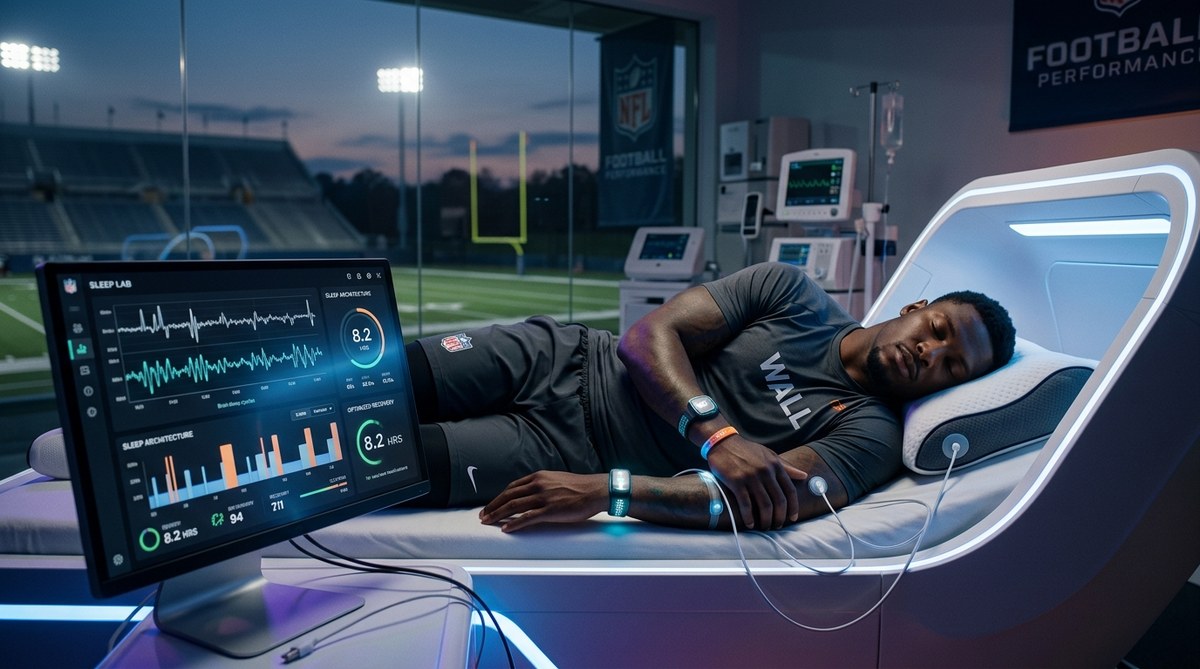
NFL sleep science performance is now a core pillar of athlete training. Teams like the Patriots and 49ers use wearable data to track heart rate variability and sleep cycles. They pair this with strict circadian lighting and temperature control. The result is a 10 to 15 percent improvement in reaction time and a sharp drop in soft-tissue injuries. For amateur athletes, applying even two of these strategies can replicate similar gains without a pro budget.
The Real Reason Sleep Affects Game Time
Most fans assume sleep is about feeling rested. In the NFL, it is about cellular repair and cognitive sharpness. When a linebacker loses a single hour of deep sleep, his reaction time slows by roughly 5 percent. That is the difference between intercepting a pass and missing it by a fingertip.
Human growth hormone, which repairs muscle tissue, is released primarily during deep sleep stages. If that cycle is interrupted, recovery stalls. A cornerback who sleeps six hours instead of eight will have slower sprint times two days later. This is why teams now treat sleep as a non-negotiable part of the training week, right alongside hydration and meal timing.
How Teams Build a Sleep Protocol
Every franchise has its own flavor, but the core process looks the same. Here is the step-by-step method that top NFL staff use to manage NFL sleep science performance.
-
Measure baseline data. Players wear rings or wristbands that track sleep stages, heart rate variability, and respiratory rate. This data is collected for two weeks to establish a personal baseline.
-
Set a fixed sleep window. Coaches assign a specific bedtime and wake time. This window does not change on off days. Consistency trains the circadian rhythm to release melatonin at the right moment.
-
Control the sleep environment. Rooms are kept between 65 and 68 degrees Fahrenheit. Blackout curtains block ambient light. Blue light from phones is eliminated 90 minutes before lights out.
-
Adjust nutrition timing. Protein intake is moved to earlier in the evening. Caffeine is banned after 2:00 PM. Some teams use tart cherry juice or magnesium supplements to support natural sleep onset.
-
Monitor recovery each morning. Players complete a readiness score based on resting heart rate and subjective feel. If the score is low, training load is reduced that day.
Common Mistakes Athletes Make at Home
Many amateur athletes copy only part of the NFL approach. They buy a fancy mattress but ignore room temperature. They track sleep duration but not sleep quality. The table below shows the difference between pro-level sleep hygiene and common errors.
| Pro Strategy | Common Mistake |
|---|---|
| Keep the bedroom pitch dark | Using a nightlight or leaving curtains cracked |
| Maintain a consistent wake time on weekends | Sleeping in for two extra hours on Saturday |
| Avoid screens for 90 minutes before bed | Scrolling social media until the pillow hits the head |
| Use blackout curtains | Wearing a sleep mask that slips off at 3 AM |
| Track heart rate variability | Only tracking hours slept with a basic app |
Why Sleep Quality Beats Sleep Quantity
A player can lie in bed for nine hours but only get five hours of restorative sleep. That is called low sleep efficiency. NFL sleep science performance focuses on the quality of each cycle. Teams look for a high percentage of REM and slow-wave sleep.
“We used to ask guys how many hours they slept. Now we ask them how many minutes they spent in deep sleep. That number tells us if they are ready to absorb a new game plan or if they need a lighter practice day.” – A sleep coach for a 2026 NFC West team
The easiest way to improve quality is to drop the room temperature. A cooler core body temperature helps you enter deep sleep faster. If you cannot control the thermostat, try a cooling mattress pad or a lighter blanket.
The Link Between Rest and Injury Prevention
The most expensive players on any roster are the ones on the injured reserve list. Teams have found that sleep deprivation increases cortisol levels. High cortisol weakens connective tissue over time. That makes hamstring pulls and ankle sprains more likely.
In 2025, one AFC East franchise tested a mandatory nap period during the afternoon on travel days. They saw a 22 percent reduction in soft-tissue injuries over the following season. The nap was only 25 minutes long. That small window of rest allowed the nervous system to reset. For amateur athletes, a short nap before evening training can produce similar protective effects.
Applying NFL Sleep Science to Your Own Routine
You do not need a $2,000 sleep tracker or a team of coaches to benefit from these insights. Start with three changes that cost nothing.
- Pick a fixed wake time and stick to it for 21 days. Your body will learn to release melatonin at the right hour.
- Turn off all screens 60 minutes before bed. Read a physical book or listen to an audio track with no visual light.
- Cool your bedroom. If you wake up sweating, lower the thermostat by two degrees.
These habits mirror the core of what pros do. The difference is that pros have a coach holding them accountable. You need to be your own coach.
The Role of Wearable Technology in 2026
Wearable tech is no longer a novelty in the NFL. It is standard gear. Devices like the Oura Ring and WHOOP band give teams a live feed of each player’s recovery status. When a quarterback shows low HRV on Tuesday, the offensive coordinator knows to keep the practice script simple.
For the average athlete, wearing a device that tracks sleep stages is a good first step. The data helps you see patterns. Maybe you sleep poorly after late workouts. Maybe your alcohol intake on Friday ruins your Saturday recovery. The numbers do not lie. For more on how gadgets are changing the game, check out how technology is revolutionizing athlete training and performance.
What This Means for Game Day Output
The connection between sleep and performance is most visible on Sunday. A player who hit his sleep targets all week will have faster reflexes, better decision making, and more explosive power in the fourth quarter. That is not speculation. It is measured in sprint times and mental processing tests.
Teams now schedule travel and meeting times around sleep windows. Red-eye flights are avoided. Early morning meetings are pushed back when possible. The goal is to protect the sleep of the players because that protects the team’s investment. If you want to see how this fits into larger training trends, read about top 10 emerging sports trends you need to watch in 2026.
Sleep as a Long Term Career Asset
The NFL career is short. The average playing span is about three years. Players who prioritize rest tend to last longer. They recover faster between games and avoid the cumulative fatigue that leads to burnout.
For the amateur athlete, the same principle applies. You can train hard for six days, but if you sleep poorly for five of them, your progress will stall. Sleep is not a passive activity. It is an active part of your training cycle. Treating it that way will change how you feel during your next workout or weekend game.
How to Start Tonight
Do not wait for the perfect setup. Start with one change tonight. Set an alarm for your bedtime, not just your wake time. That alarm is a signal to start winding down. Put the phone in another room. Lower the lights. Let your body know that sleep is coming.
The NFL sleep science performance edge is real. It is built on small, repeatable habits. You can adopt those same habits. The difference between a good athlete and a great one is often just a few extra minutes of deep sleep each night. That is a gap you can close starting tonight. For more on building routines that adapt to your body, take a look at how to build a personalized training plan that adapts to your body’s signals.
Rest Is Your Best Teammate
The most underrated piece of equipment in any athlete’s bag is their pillow. The NFL has figured this out. Now it is your turn. Stop treating sleep as the thing you do after training. Treat it as the thing that makes training work. Your body will thank you on the field, in the gym, and in your everyday life.