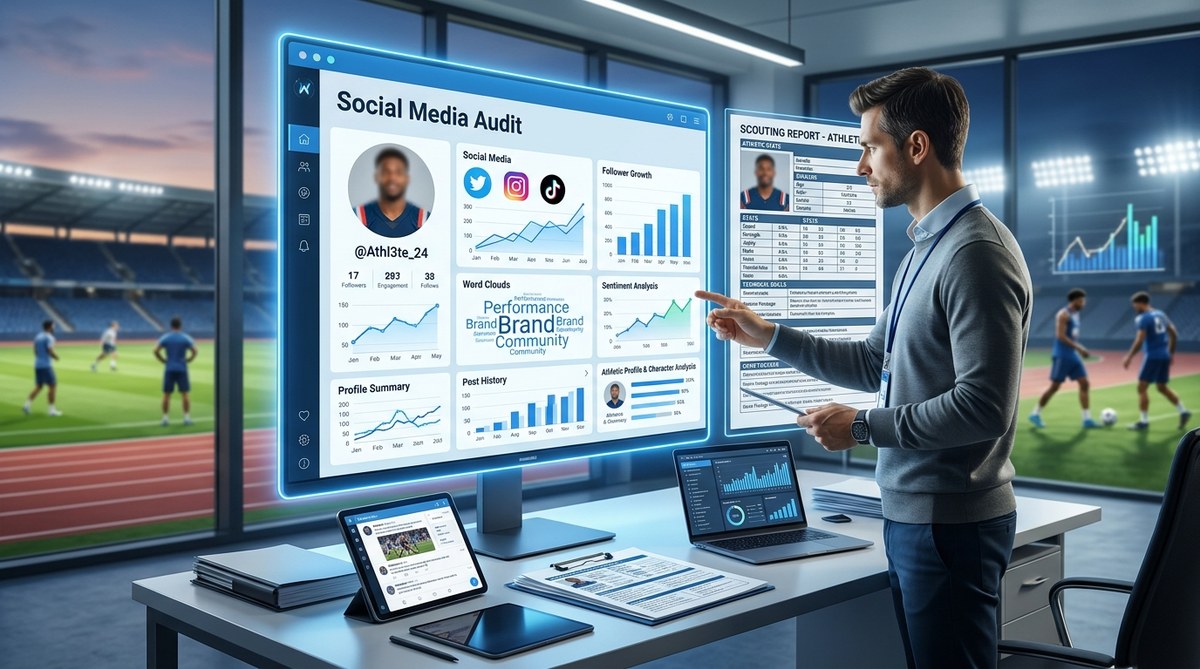
Professional sports teams have always relied on scouting reports to evaluate talent. Coaches study game film. Trainers measure vertical jumps and 40-yard dashes. But in 2026, a new kind of dossier is landing on executives’ desks: the social media audit. It is not just a popularity contest. It is a deep, data-backed look at how an athlete builds a brand, connects with fans, and drives engagement. For sports marketing professionals and digital strategists, understanding this shift is no longer optional. It is the new standard.
Social media audits are becoming essential tools for pro sports teams evaluating talent. Unlike traditional scouting, which focuses on physical stats, these audits measure brand value, audience sentiment, and engagement rates. Teams using this data make smarter draft picks, negotiate better sponsorships, and build deeper fan loyalty. The future of scouting is digital.
Why Traditional Scouting Falls Short
A player might run a 4.3-second 40-yard dash. That is impressive. But what happens when that same player cannot hold a fan’s attention during a live Instagram Q&A? In today’s media landscape, an athlete’s influence extends far beyond the field. Sponsors care about reach. Teams care about marketability. Fans care about authenticity.
Traditional scouting reports do not capture any of that. They measure physical output, not digital impact. A social media audit fills that gap. It gives teams a complete picture of an athlete’s total value. As we discussed in our piece on how technology is revolutionizing athlete training and performance, the data revolution is touching every corner of sports.
What a Social Media Audit Actually Measures
Let us break down the core metrics. A proper audit goes far beyond follower counts. You need to look at engagement rate, audience demographics, sentiment analysis, and content consistency. Here is a table that compares the key metrics of a social media audit against traditional scouting metrics.
| Social Media Audit Metric | What It Measures | Why Teams Care |
|---|---|---|
| Engagement Rate | Likes, comments, shares per post per follower | Shows real fan connection, not vanity metrics |
| Audience Demographics | Age, location, gender, interests of followers | Helps match athletes to team markets and sponsors |
| Sentiment Analysis | Positive, neutral, negative tone in comments | Reveals brand reputation and potential risk |
| Content Consistency | Frequency and timing of posts | Indicates reliability and professionalism |
| Follower Growth Trend | Rate of new followers over 30, 60, 90 days | Predicts future reach and momentum |
Compare that to a traditional scouting report that lists height, weight, and bench press max. The difference is clear. One tells you what an athlete can do. The other tells you who an athlete is.
The Process: How Teams Run an Audit
If you are a digital strategist or a team executive looking to implement this, here is a practical step-by-step process.
- Identify the target athletes. Start with a list of prospects from the draft pool, transfer portal, or free agency. Include both established names and under-the-radar talent.
- Pull raw data from platforms. Use native analytics tools or third-party software to extract follower counts, post frequency, and engagement numbers from Instagram, TikTok, X (formerly Twitter), and YouTube.
- Calculate the engagement rate. Divide total interactions by total followers, then multiply by 100. A rate above 3% is solid. Above 5% is exceptional. Anything below 1% is a red flag.
- Run sentiment analysis. Read through the last 50 to 100 comments on recent posts. Categorize them as positive, negative, or neutral. Look for patterns in tone.
- Map audience demographics. Check if the athlete’s follower base aligns with your team’s market. A player with a huge following in Los Angeles may not move the needle for a team in Cleveland.
- Compile a risk report. Search for past controversial posts, brand conflicts, or negative press. This step protects the team’s reputation.
- Present the findings. Combine the data into a one-page scouting addendum that sits next to the traditional physical evaluation.
Common Mistakes Teams Make
Running a social media audit sounds simple. But teams often trip over the same errors. Here are the biggest ones to avoid.
- Relying only on follower count. Follower count is easy to fake. Bots and bought followers inflate numbers. Engagement rate is the real signal.
- Ignoring platform context. A player with 2 million TikTok followers may have zero presence on LinkedIn. That matters depending on the team’s sponsorship goals.
- Forgetting to check for red flags. A single offensive tweet from three years ago can blow up during a contract negotiation. Always run a full history scan.
- Treating all engagement the same. A comment that says “fire” is not the same as a comment that says “you are a legend.” Sentiment analysis separates genuine praise from generic noise.
“We used to sign athletes based on highlight reels. Now we sign them based on highlight reels and audience trust. The social media audit is the fastest way to measure that trust.” – Anonymous NFL front office strategist
The Connection to Fantasy Football and Fan Culture
Social media audits are not just for front offices. Fantasy football players and superfans are using similar logic to gain an edge. When you know which athletes have the highest engagement, you can predict which players will get the most media coverage and, in turn, the most trade value. Our guide on how real-time football data gives fantasy players a genuine edge shows how this data flows into everyday fan decisions.
The same principle applies to esports. As the debate over whether esports athletes are real athletes continues, teams in that space are already using social audits to sign streamers and competitors. The trend is universal.
Key Benefits for Team Executives
If you are still on the fence, consider these concrete advantages.
- Better sponsorship alignment. Brands want athletes who match their target audience. A social audit shows you exactly who follows each player. You can pitch sponsors with confidence.
- Reduced contract risk. Signing a player with a toxic online presence can cost millions in lost deals. Audits flag those risks before ink hits paper.
- Stronger fan engagement. Players who know how to talk to fans online drive ticket sales and merchandise revenue. Audits identify those communication skills.
- Smarter draft strategy. In 2026, the draft is as much about brand building as it is about athletic ability. Teams that ignore social data are drafting blind.
The Tools You Need
You do not need a massive budget to start. Many of the best tools are affordable or even free. Here is a list of what the most forward-thinking teams are using.
- Native platform insights. Instagram, TikTok, and YouTube all offer free analytics dashboards inside their apps. Start there.
- Third-party analytics platforms. Tools like Sprout Social, Hootsuite, and Brandwatch offer deeper reporting and sentiment analysis.
- Manual review. For smaller audits, nothing beats scrolling through the last 50 posts and taking notes. It is time consuming, but it builds intuition.
- AI-assisted sentiment scanners. New tools in 2026 can scan thousands of comments in seconds and flag emotional tone. These are becoming standard in pro sports front offices.
If you want to see where this technology is heading, check out our analysis of top 10 emerging sports trends you need to watch in 2026. Social audits are just the beginning.
How to Present an Audit to Your Team
Data is useless if no one acts on it. When you bring a social media audit to your head coach or general manager, frame it as a supplement, not a replacement. Say something like: “This player runs a 4.5 forty, but his engagement rate is in the bottom 10% of the draft class. We need to factor that into our offer.”
Use the table from earlier in this article as a template. Keep it to one page. Executives do not have time to scroll through spreadsheets. Give them the headline numbers and the risk flags. Let them ask for the details.
Why This Trend Is Not Slowing Down
The numbers speak for themselves. Athletes with strong personal brands earn more in endorsements. Teams with high social engagement sell more tickets. The connection between digital presence and real-world revenue is proven. As wearable tech and biometrics continue to evolve, the line between on-field performance and off-field influence will blur even further. We touched on this in our article about is wearable tech the key to avoiding sports injuries, but the same logic applies to brand monitoring. If you can measure it, you can improve it.
Putting Social Audits Into Practice
If you are a sports marketing professional, start small. Pick one athlete your team is considering. Run a manual audit using the seven steps listed above. Present your findings to a colleague. See if the data changes the conversation. If it does, you will know the method works.
For digital strategists, build a template. Create a standard report format that your team can reuse for every prospect. Consistency is key. When every athlete is evaluated using the same metrics, comparisons become fair and actionable.
And for team executives, demand this data. Ask your scouting department for a social media addendum on every top prospect. Make it part of the standard operating procedure. The teams that adopt this practice now will have a competitive advantage for years to come.
The New Scouting Report Is Already Here
Social media audits are not replacing traditional scouting. They are completing it. A 40-yard dash tells you about speed. A social audit tells you about influence. Both matter. In 2026, the smartest teams in the NFL, NBA, MLB, and beyond are using both sets of data to make better decisions.
The question is not whether your team should start using social media audits. The question is whether your team can afford to ignore them. The answer is clear. Start running audits today. Build the practice into your workflow. Watch how it changes the way you evaluate talent, sign sponsors, and connect with fans.
The future of scouting is not just on the field. It is in the feed.